
Field Stories
From Waste to Action: How Young People in Rupandehi Are Shaping a Greener Community
Restless Development | 2026-08-31In Tilottama, Lumbini Province, the Rotaract Club of Central Rupandehi is showing what happens when young people are trusted with the resources, skills and space to lead environmental action.
On an August morning, seven teams of young people set out across the streets of Butwal with a simple challenge: collect as much plastic waste as possible in three hours.
There was a competitive element. There were prizes. There were teams racing along a designated route.
But underneath the competition was a more serious message: plastic waste is not an abstract environmental problem. It is sitting in our streets, markets and neighbourhoods—and young people can do something about it.
By 10 a.m., the teams had collected 387 kilograms of plastic waste.
The Trash Collection Competition was one of several activities led by the Rotaract Club of Central Rupandehi through the EU-funded GreenShift Nepal project. Supported through a youth advocacy grant, the club used the opportunity not simply to run environmental events, but to experiment with different ways of getting young people, communities, schools, businesses and local government involved in tackling plastic waste.
The result was a project that moved between awareness, action, skills, data and advocacy—and demonstrated the power of youth-led solutions.
Young people taking the lead
The Rotaract Club of Central Rupandehi is based in Tilottama Municipality and has been active in community and youth leadership.
Through GreenShift, the club received a grant of NPR 200,000 to develop and implement its own environmental action. From the beginning, the project placed young people in leadership roles, with Rotaract members taking responsibility for planning, coordination, volunteer mobilisation, implementation and documentation.
The first step was to make sure the young volunteers themselves had the knowledge and tools to lead.
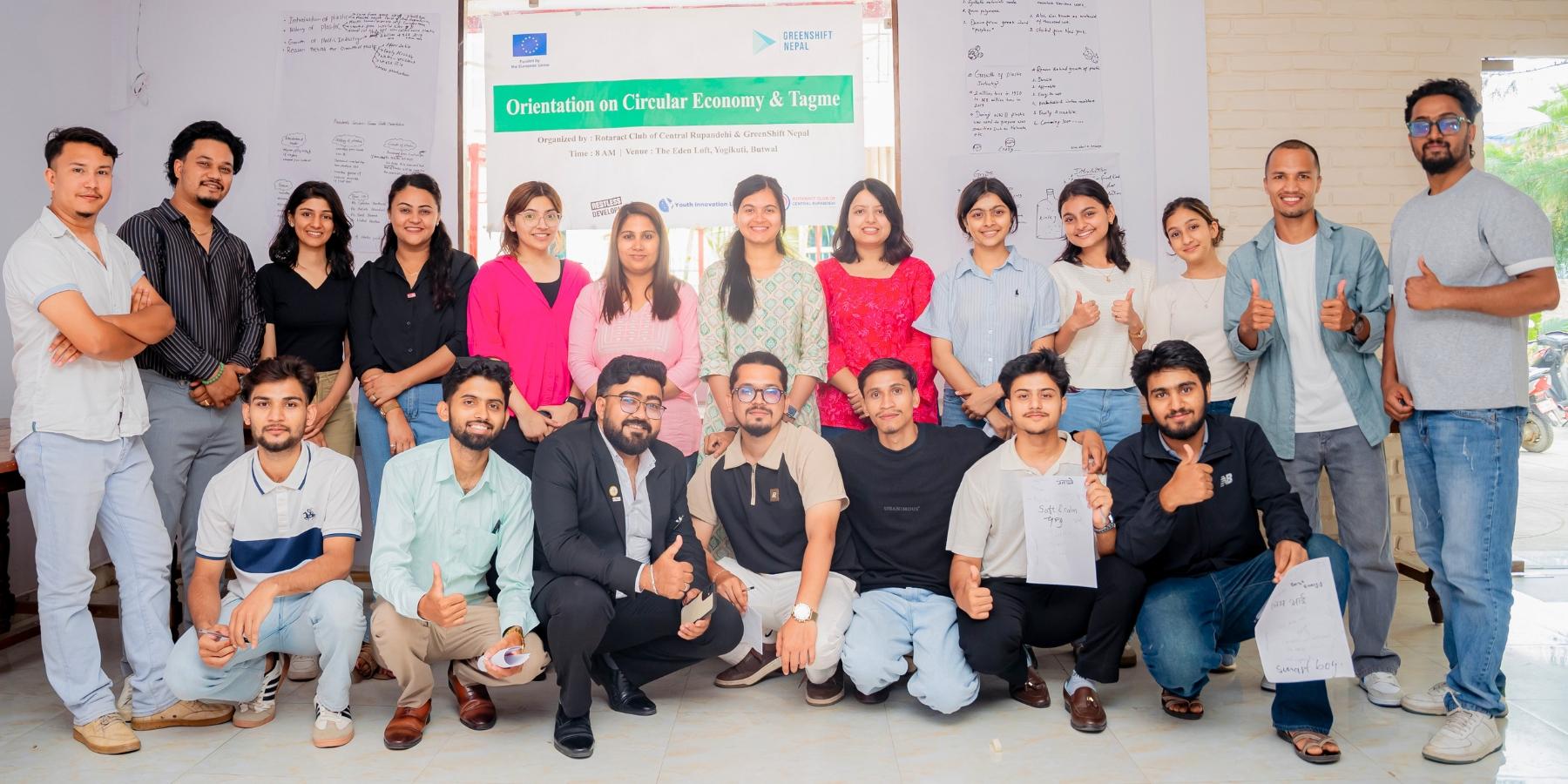
In May, 20 volunteers from the Rotaract Club of Central Rupandehi and Interact Club of Central Butwal participated in an orientation on circular economy, environmental and social safeguarding, plastic management, photography and the TagMe application. The training combined discussion with practical field exercises, including collecting waste-related data using TagMe.
The intention was clear: young people would not simply be participants in someone else's environmental programme. They would have the knowledge and skills to shape and deliver their own.
Turning awareness into action
The club then took environmental messages beyond meeting rooms and training sessions.
On World Environment Day, more than 300 people gathered at Tilottama Park for an environmental awareness programme jointly organised with Tilottama Municipality and the Tilottama Park Committee.
The day combined tree planting, an environmental information stall and street theatre.
In just five minutes, more than 700 saplings were planted. The activity brought together elected representatives, government officials, students, young people and community members, creating a visible demonstration of collective responsibility for the local environment.
But the young people also understood that environmental action is not only about planting trees.
Through a street drama, audiences were invited to think about the everyday realities of plastic pollution—from single-use plastics and irresponsible disposal to blocked drainage and water pollution.
More than 300 people watched the performance, which used humour, storytelling and familiar situations to make environmental issues accessible. Audience members subsequently discussed the issues raised and received information about the TagMe campaign.
The message was simple: environmental change starts with what people do every day.
From plastic waste to possibility
The club also wanted young people to see waste differently.
At Shanti Namuna Secondary School, more than 65 students took part in a hands-on plastic reuse training programme built around the theme “Transforming Plastic Waste into Sustainable Opportunities.”
Instead of simply being told about recycling, students learned by making.
They learned how to combine plastic and agricultural materials to make sitting mats. They experimented with traditional basket weaving using recycled plastic strips. They learned to make decorative garlands from plastic and fibre bags.
The training deliberately connected environmental sustainability with existing skills and cultural practices. Traditional Nepali craft techniques became a way of imagining new uses for materials that might otherwise be thrown away.
The young participants were then encouraged to pass on what they had learned to classmates and family members.
That created a multiplier effect: instead of 65 young people being the end point of the activity, they became potential environmental educators within their own communities.
For the Rotaract Club, this was also about changing the way young people think about waste—not simply as something to dispose of, but as something that can be reused, transformed and potentially create economic opportunities.
Making the problem visible through data
One of the most important parts of the project happened away from the stage.
Young volunteers took the TagMe application into the field to document waste-related information.
The club eventually collected 609 waste data records, creating a digital record of waste locations and giving young people practical experience in field observation, data collection, digital reporting and environmental documentation.
And the process did not go exactly according to the original plan.
The team had initially intended to conduct the waste collection competition and TagMe activities in Tilottama. But during their assessment, they found that there was not enough visible waste in the targeted areas to make the activities meaningful.
Rather than carrying out an activity simply because it had been planned, the young team adapted. In coordination with the project team, they shifted the activities to Butwal, where they could identify suitable waste locations and generate more useful results.
That decision captures an important part of what youth leadership can look like: having the confidence to change course when the evidence tells you that something is not working.
Bringing different voices to the same table
The club's work also moved beyond awareness and clean-up activities into advocacy.
In July, more than 100 people—including students, teachers, government representatives, industry representatives and waste management actors—came together at Shanti Namuna Secondary School for a dialogue on plastic reduction, reuse and recycling.
The panel brought different perspectives into one room: a waste management expert, an industry representative and a local government official.
Together, they discussed the challenges of plastic management, including microplastics, consumer behaviour, recycling, producer responsibility and the role of government regulation.
The discussion also generated possible solutions, including stronger municipal regulations, greater environmental awareness among children and increased use of recycled materials in production.
For the young organisers, this was an opportunity to do more than raise awareness. They created a space where young people could engage with the people who make, regulate, manage and live with the consequences of plastic waste.
Students and teachers who participated were encouraged to share what they learned with classmates and parents, extending the conversation beyond the event itself.
When youth power becomes collective power
The Trash Collection Competition brought the different strands of the project together.
Seven youth organisations participated in the three-hour challenge, competing to collect the largest quantity of plastic waste along a designated route.
The Rotaract Club mobilised seven volunteers to manage logistics, provide collection sacks, masks, gloves and water, guide teams and coordinate with traffic police to support safe movement along the route.
The collected plastic was weighed transparently at the end of the competition.
The final figure—387 kilograms—was more than a competition result. It made the scale of plastic waste visible while demonstrating what organised youth action could achieve in just three hours. The waste was subsequently transported for proper disposal.
And perhaps just as importantly, the activity connected seven youth organisations around a shared environmental goal.
The club's approach was therefore not about young people acting alone. It was about young people creating opportunities for others to act with them.
From a grant to a platform for leadership
By the end of August, the Rotaract Club brought its GreenShift journey back to Tilottama Municipality.
The team presented its activities, TagMe data and experiences to municipal representatives and other stakeholders, and screened a documentary they had produced about the project.
The documentary captured the broader journey: youth participation, fieldwork, waste initiatives, community engagement, data collection, achievements and lessons learned.
The closing session was also an opportunity to look ahead.
The project had strengthened relationships between the youth group and local government, with both sides expressing interest in continuing collaboration around plastic reduction, waste management, circular economy and youth-led advocacy.
The project may have started with a grant, but its most important outcome was not a single event or even a single number.
It was the experience of young people seeing a problem, developing the skills to understand it, testing different solutions, bringing others together, adapting when circumstances changed, and making their voices heard by decision-makers.
From 609 pieces of data to 387 kilograms of collected plastic, from 700-plus saplings planted in five minutes to more than 65 students learning how waste can be transformed, the Rotaract Club of Central Rupandehi demonstrated that youth participation is not an add-on to environmental action.
It can be the force that drives it.
And in Rupandehi, young people are showing what that force can look like.
Field Stories
The Power of Teamwork: Boys Union Club’s Journey into Youth-led Environmental Action
Restless Development | 2026-08-27When Boys Union Club received a Youth Advocacy Grant under the EU funded GreenShift Nepal project, environmental advocacy was a new territory for a group whose experience had largely been rooted in sports. In Ichchhakamana Rural Municipality, its members are now using that experience of teamwork and mobilisation to get young people thinking about waste, plastic and the circular economy.
In Ichchhakamana Rural Municipality, environmental action comes with its own set of challenges. Waste collection does not reach all communities, plastic waste is difficult to manage, and young people frequently leave the municipality in search of employment. For a youth organisation, this makes mobilisation particularly difficult. It also makes the question of who will take responsibility for local environmental issues an important one.
Boys Union Club was already accustomed to bringing young people together, but mostly through sports. GreenShift offered the club an opportunity to take that organising experience into a new area. As one of three youth groups selected for the Youth Advocacy Grant, the club received support to lead local activities around circular economy, waste management and environmental awareness.
For Rabi Khamcha, a member of Boys Union Club, the connection between the club's existing work and its new environmental role became clear quite quickly.
“We already knew how to work as a team. What we had not done before was use that teamwork for an environmental issue. GreenShift gave us the opportunity to learn something completely new and then take that learning to other young people.”
The first step was learning themselves. In May, 20 local young volunteers joined Boys Union for an orientation on circular economy and the TagMe application. It was the club's first time organising an activity of this kind and leading a conversation centred on an environmental agenda. With technical and facilitation support from Restless Development and Youth Innovation Lab, the volunteers explored waste management, circular economy and digital waste mapping.
That first experience gave the group a foundation to begin working more independently. A few months later, the club was no longer talking only to its own volunteers. It was taking the discussion into schools.
Taking a new conversation to young people
On 10 July, Boys Union organised an awareness and interaction programme for Grade 11 and 12 students at Sarva Shanti Secondary School in Kurintar. Fifty three people took part. Students learned about different types of plastic, waste management, circular economy, their own roles and responsibilities in managing waste, and how the TagMe application can be used to document waste.
The activity was designed as a conversation rather than simply a lecture. After the presentation, students took part in questions and discussion, asking about waste management and the practical application of what they had learned. The group's subsequent assessment recorded several changes among participants: students demonstrated a clearer understanding of waste management and circular economy, understood the purpose and use of TagMe, showed greater interest and participation in environmental protection, and expressed a commitment to keeping their school clean and green.
For Rabi, that response was significant because it showed the young volunteers that awareness could lead to something more than simply knowing new information.
“The most encouraging part was seeing students connect the discussion to their own school. They were not only asking what circular economy means. They were asking what they can actually do with the waste around them.”
The conversation continued at Shree Rani Khola Secondary School on 29 July, where another 46 participants took part in an awareness programme on circular economy. The students were introduced to waste management and the different types of plastic, continuing the club's effort to make environmental issues part of everyday conversations among young people.
Finding environmental leadership in familiar strengths
What makes Boys Union's experience distinctive is that the club did not have to start from scratch as a youth organisation. It already had relationships, volunteers and experience in organising people. What changed was where those strengths were being applied.
Project staff described the club's GreenShift experience as unique precisely because its background was in core sports. Mobilising local young volunteers, coordinating with stakeholders, managing events, reporting and documenting activities were all new experiences for the team, as was introducing circular economy as a subject for discussion within the club and the wider community.
The club also began reaching beyond schools. As part of its grant activities, Boys Union conducted community awareness on circular economy with stakeholders from the hotel sector, opening up a conversation about how businesses connected to tourism and hospitality can think about waste and resource use.
For a municipality where tourism and movement of people can add pressure to local waste systems, that broader engagement matters. It also marked another step in the club's own development: young volunteers were learning to engage not only with their peers, but also with community and business stakeholders.
“At first, we thought our role would mainly be to create awareness among young people,” Rabi says. “As we started working, we understood that waste is connected to everyone. Schools, businesses, families and local government all have a role.”
What changes when young people take the lead
The numbers tell part of the story. Twenty young volunteers took part in the club's first orientation. Fifty three students joined the programme at Sarva Shanti Secondary School, followed by another 46 at Shree Rani Khola Secondary School.
But the more interesting changes are found in what those participants did with the conversation. At Sarva Shanti, students moved from learning about waste management and TagMe to expressing greater interest in environmental protection and a commitment to keeping their school clean and green. The collaboration between the school and Boys Union also became stronger through the activity.
For Boys Union itself, the shift is equally important. The club entered GreenShift with environmental advocacy as an unfamiliar area. It is leaving with young members who have experience facilitating discussions, working with schools and stakeholders, communicating an environmental message and thinking about waste as a community issue.
Rabi sees that as something the club can carry forward.
“We have learned that youth leadership does not have to stay within one area. We can bring the same energy we use for sports into other issues that matter to our community. The important thing is that young people are given the chance to lead.”
In Ichchhakamana, that chance has allowed Boys Union to add a new dimension to its identity. The club is still a place where young people come together, but its idea of what they can come together to do has expanded.
For a community where many young people eventually leave in search of opportunities elsewhere, creating reasons for those who remain to participate, organise and take responsibility locally is significant. Boys Union's GreenShift journey has started with waste and circular economy, but it has also been a journey in youth leadership itself.
The club came into the project knowing how to build a team.
It has spent the past few months learning what that team can do for its community.
Field Stories
GreenShift Year 3: How 12 Schools Turned Climate Learning into Action
Restless Development | 2026-08-24Climate change can often feel like a problem too large and distant for a school to tackle. But for young people, the effects of environmental degradation are already part of everyday life, from increasing waste and plastic pollution to changing weather patterns and pressure on the natural resources their communities depend on. A climate-smart school offers one way to make these issues more tangible. It is a school where students are encouraged not only to learn about climate change and environmental sustainability, but also to understand the challenges around them and take practical action.
That is the idea behind the Climate Smart Schools initiative under the European Union funded GreenShift Nepal project. In its third year, 12 schools from Khadak Municipality in Saptari, Ichchakamana Rural Municipality in Chitwan, and Tilottama Municipality in Rupandehi were selected to participate. Four schools from each municipality joined the initiative, receiving support to integrate climate education, sustainable waste management and circular economy practices into school life.
The 12 schools were Shree Shanti Model Secondary School, Shree Shankarnagar Durgadatta Secondary School, Shree Janajyoti Secondary School and Shree Bhulke Secondary School from Tilottama Municipality; Shree Rastriya Secondary School Hattibang, Shree Sravashanti Secondary School, Shree Triveni Baraha Secondary School and Shree Ranikhola Secondary School from Ichchakamana Rural Municipality; and Shree Rajaji Tulshilal Jonche Janata Secondary School, Shree Janata Secondary School Pansera, Shree Bhawani Prasad Sakal Prasad Ram Prasad Janata Secondary School and Shree Janata Secondary School Bhairoganj Belha from Khadak Municipality.
What emerged over the course of the initiative was not one uniform model of a climate-smart school. Each school responded to its own circumstances. Some focused on waste management and reducing plastic use. Others used plantation and gardening to engage students with their environment. Several took students outside the classroom to see how waste is collected, processed and disposed of. Many used Eco Clubs to organise activities and bring environmental messages to the wider community.
Together, their experiences show how climate education can become more meaningful when students are given opportunities to act on what they learn.
Making waste something students could understand
One of the common areas of work across the schools was the circular economy, an approach that encourages resources to be used for as long as possible and waste to be reduced, reused and recycled rather than simply discarded.
For students, understanding that idea often began with seeing the waste system for themselves.
At Shree Janajyoti Secondary School, Tilottama Municipality, Eco Club leaders received an orientation on the circular economy before visiting a landfill site. At Shree Shankarnagar Durgadatta Secondary School, Tilottama Municipality, Eco Club members similarly received training on climate change and the circular economy and visited waste management sites. Shree Bhulke Secondary School, Tilottama Municipality organised a field visit to a waste processing and knowledge centre, where students observed waste collection, segregation, processing and recycling.
The exposure visits gave students something that a classroom session alone could not: a direct view of what happens to the waste generated by households and schools.
The learning then began to influence what happened within the schools themselves.
At Shree Triveni Baraha Secondary School, Ichchakamana Rural Municipality, waste segregation bins were installed and Eco Club members took on the responsibility of monitoring junk food. Shree Bhulke Secondary School, Tilottama Municipality also introduced waste segregation bins, while Shree Rastriya Secondary School Hattibang, Ichchakamana Rural Municipality distributed dustbins and plants to students.
At Shree Shankarnagar Durgadatta Secondary School, Tilottama Municipality, the school went a step further by replacing plastic bottles with stainless steel jugs and glasses. Shree Bhawani Prasad Sakal Prasad Ram Prasad Janata Secondary School, Khadak Municipality made a similar shift, introducing reusable stainless steel jugs and glasses as well as a water filter and waste segregation bins.
These changes were modest, but they gave students practical ways to apply the environmental lessons they were receiving.
Turning school grounds into places for climate action
Plantation and gardening provided another practical entry point.
Across the three municipalities, schools used their own grounds and surrounding areas to give students opportunities to take part in environmental activities. At Shree Janajyoti Secondary School, Tilottama Municipality, plantation was combined with a street clean-up in which students collected five kilograms of waste. Shree Shanti Model Secondary School, Tilottama Municipality combined plantation and clean-up activities with an environmental drawing competition. Shree Ranikhola Secondary School, Ichchakamana Rural Municipality also carried out plantation activities alongside its other climate-related work.
At Shree Bhulke Secondary School, Tilottama Municipality, students and teachers participated together in plantation and garden strengthening. The involvement of teachers was important because it positioned environmental action as something shared across the school community rather than an activity limited to the Eco Club.
For some schools, however, the environmental context extended beyond the school compound.
At Shree Rastriya Secondary School Hattibang, Ichchakamana Rural Municipality, Principal Lok Bahadur Magar connected environmental education with the realities of the community around the school. Agriculture, particularly maize farming, is an important part of local livelihoods, and the school saw potential in helping students think about how local resources could support more sustainable livelihoods. Fruit plantation was one of the ideas encouraged by the school.
“Children should be aware of this from their young age,” Magar said.
His perspective illustrates why climate-smart education can mean different things in different places. In an agricultural community, climate awareness is closely connected to land, natural resources and livelihoods. Helping students understand those connections can be as important as teaching them about global climate change.
When students took the message outside
The schools also found ways to turn environmental awareness into public action.
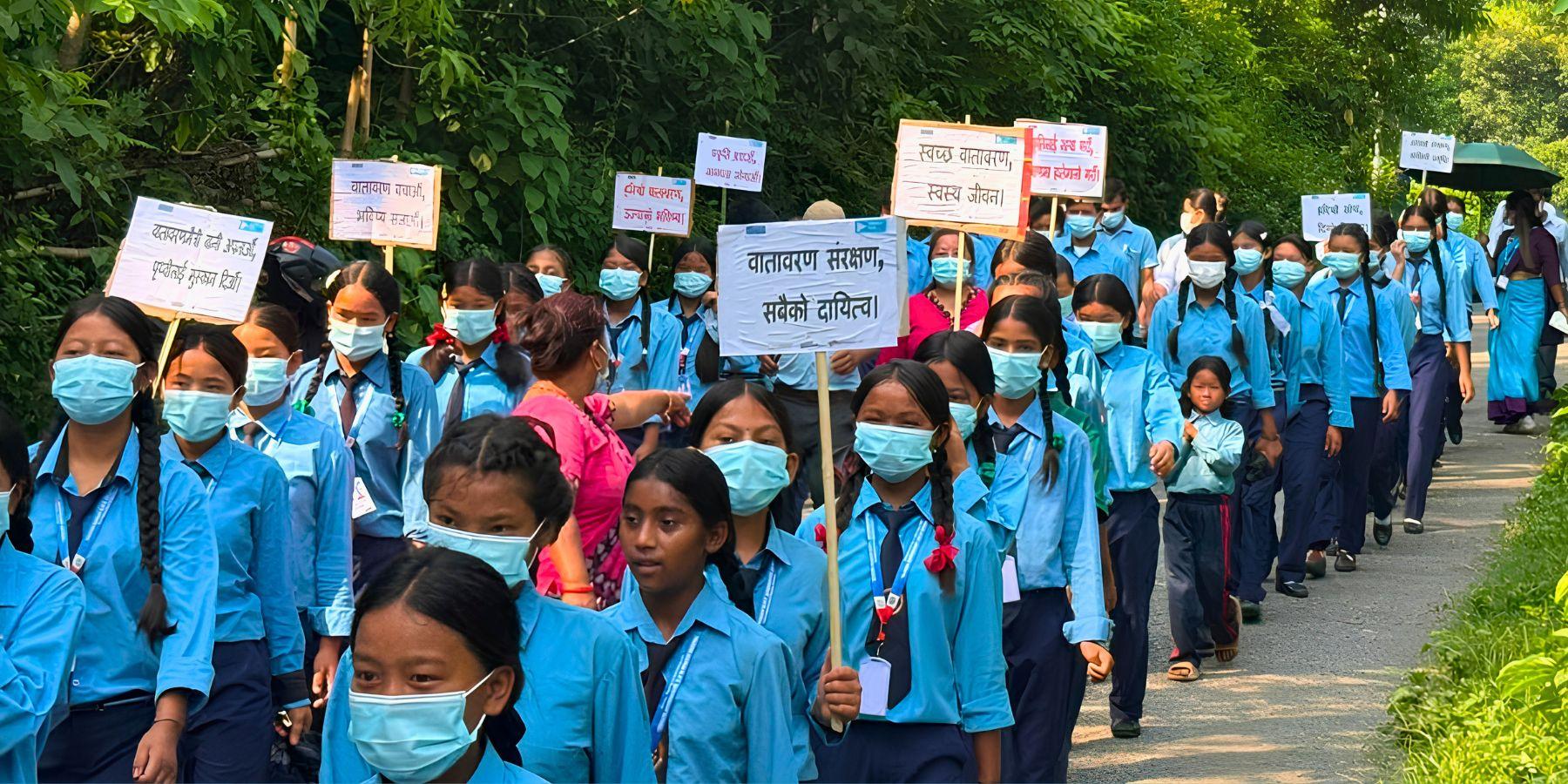
At Shree Bhulke Secondary School, Tilottama Municipality, students and teachers organised an awareness rally during World Environment Day. Carrying placards and chanting messages about protecting the environment and reducing plastic use, the students took their campaign through the surrounding community.
The school subsequently reported changes in students' behaviour. Students became more conscious about using designated waste bins, the school observed a reduction in single-use plastic use and more students became interested in joining the Eco Club. Teachers also began incorporating environmental themes more regularly into classroom discussions.
The school reported that the influence extended into homes as well. Parents observed their children practising waste segregation and reducing plastic use, while community members who witnessed the rally expressed appreciation for the students' efforts.
Similar efforts took place elsewhere. Shree Shankarnagar Durgadatta Secondary School, Tilottama Municipality organised an environmental rally using banners and placards, while schools in Khadak Municipality combined awareness activities with plantation, clean-up programmes, quizzes and other community-facing events.
These activities gave students a role that went beyond being recipients of environmental information. They became people who could communicate that information to others.
Eco Clubs at the centre of the change
Much of this work was driven by the schools' Eco Clubs.
The clubs provided students with an organised space to discuss environmental issues, plan activities and take responsibility for putting ideas into practice. At Shree Ranikhola Secondary School, Ichchakamana Rural Municipality, 22 Eco Club members participated in circular economy training. At Shree Triveni Baraha Secondary School, Ichchakamana Rural Municipality, the Eco Club was involved in waste segregation and monitoring junk food. At Shree Rastriya Secondary School Hattibang, Ichchakamana Rural Municipality, World Environment Day activities reached 159 Eco Club members.
In Khadak Municipality, the four Climate Smart Schools also used Eco Clubs to build participation within their school communities.
At Shree Janata Secondary School Bhairoganj Belha, Khadak Municipality, the school first formed its Eco Club and oriented its management committee before involving parents in plantation and environmental quiz activities. Shree Janata Secondary School Pansera, Khadak Municipality combined environmental awareness with plantation, clean-up activities, plastic reduction and an environmental quiz. Shree Bhawani Prasad Sakal Prasad Ram Prasad Janata Secondary School, Khadak Municipality brought together training, plantation, clean-up, an awareness rally, environmental competitions and practical changes such as reducing plastic bottles.
Meanwhile, Shree Rajaji Tulshilal Jonche Janata Secondary School, Khadak Municipality engaged its Eco Club through circular economy orientation and environmental activities, while the schools in Ichchakamana Rural Municipality combined classroom learning with exposure visits, plantation and community awareness.
The result was that environmental action became something students could participate in rather than simply something adults talked about.
Change that reaches beyond a single activity
It would be easy to measure the Climate Smart Schools initiative through the number of orientations conducted, students reached, trees planted or clean-up activities organised. Those figures matter, but they do not tell the whole story.
The more significant change lies in what happened around those activities.
Students at Shree Bhulke Secondary School, Tilottama Municipality began paying greater attention to waste disposal and plastic use. At Shree Janajyoti Secondary School, Tilottama Municipality, students were able to connect classroom learning with the realities of a landfill. At Shree Shankarnagar Durgadatta Secondary School, Tilottama Municipality, the school changed some of its own practices by replacing plastic bottles with reusable alternatives. At Shree Rastriya Secondary School Hattibang, Ichchakamana Rural Municipality, environmental learning was connected to local agriculture and future livelihoods. At Shree Janata Secondary School Bhairoganj Belha, Khadak Municipality, parents became part of the school's environmental activities.
The schools also created opportunities for young people to practise leadership. They organised rallies, participated in competitions, led clean-ups, visited waste facilities and worked through their Eco Clubs. In doing so, environmental education became connected with communication, teamwork and community participation.
This was particularly important because the schools were operating in very different contexts. Tilottama Municipality has existing municipal efforts around waste segregation and environmental awareness. In Ichchakamana Rural Municipality, some schools face more limited access to formal waste collection, making plastic waste a more difficult challenge. In Hattibang, environmental concerns are closely tied to agriculture and local livelihoods. The schools therefore had to adapt their climate action to the realities around them.
A foundation for what comes next
The 12 Climate Smart Schools have not solved the environmental challenges facing their communities, nor was that the expectation.
What they have done is create a starting point.
They have helped students understand the connections between waste, consumption, natural resources and climate change. They have given Eco Clubs a practical role within school life. They have encouraged teachers and parents to participate. And in several cases, they have shown that what students learn at school can influence behaviour beyond the school gates.
Across Khadak Municipality, Ichchakamana Rural Municipality and Tilottama Municipality, the 12 schools have each taken their own route towards becoming more climate smart. Some changed how they handled waste. Some reduced plastic. Some planted and maintained gardens. Some took students to see waste management systems first-hand. Some brought parents and communities into environmental activities. All created spaces for young people to participate.
The significance of the initiative lies in that combination of learning and action. When students are given the opportunity to understand an environmental problem and then participate in addressing it, climate education becomes something they can experience in their everyday lives.
And that is what these 12 schools have been building through GreenShift Year 3: not simply awareness about climate change, but a generation of students who are beginning to see themselves as part of the response.
Field Stories
Khadak's Young People Take the Lead
Restless Development | 2026-08-23For Khadak Nagar Yuwa Sanjal, environmental advocacy began with learning about waste. It soon became a much bigger effort to bring young people, community members and local stakeholders into the same conversation about how Khadak can manage its environment differently.
In Khadak Municipality, waste is a problem people encounter in ordinary places: along roads, around markets, in public spaces and near schools. For young people living in the municipality, it is difficult to separate environmental concerns from everyday life.
Khadak Nagar Yuwa Sanjal was one of the youth organisations selected to receive a Youth Advocacy Grant under the EU funded GreenShift Nepal project. The grant gave the group an opportunity to turn its interest in community service into a more focused programme of environmental action, beginning with the young people who would lead it.
In May, 32 local young people participated in an orientation on circular economy and the TagMe application. They learned about waste management, plastic reduction, reuse and recycling, while also gaining practical knowledge about using digital tools to identify and document waste. The young volunteers were then expected to support the group's wider campaign, giving the training a purpose beyond the session itself.
For Rakiraj Prabhat Chaudhary, Chairperson of Khadak Nagar Yuwa Sanjal, the training helped the group see environmental advocacy as something that required more than awareness.
“We already knew that waste was a problem in our community. What GreenShift helped us understand was how we could organise ourselves around that problem. We wanted our young volunteers to learn first, but we also wanted them to take that learning back into the community.”
That is exactly what began to happen.
From learning to action
The first major step was a community clean-up.
Fifty six people participated as young volunteers, local citizens and representatives from different organisations came together to clean roads, public spaces, school premises and market areas. The group also used the activity to talk with community members about waste management and reducing plastic waste.
The organisers divided participants into groups, provided them with cleaning materials and worked across different parts of the municipality. The activity was practical, but the young people were also using it as an opportunity to start conversations with residents.
For Rakiraj, that combination mattered.
“When you clean a place, people can immediately see the result. But we wanted the conversations to continue after the clean-up. We wanted people to think about where the waste comes from, what they can reduce and what they can do with the waste they already produce.”
That distinction became important to the group's approach. The clean-up addressed what was already visible, while the awareness component tried to address the behaviour and habits behind it.
The activity also brought together people who might not normally work alongside one another. Youth volunteers, local residents and representatives of different organisations participated in the same effort, giving the young organisers an opportunity to practise coordination and community mobilisation.
Making space for a bigger conversation
The group's work did not stop at the community level.
On 23 July, Khadak Nagar Yuwa Sanjal worked with Khadak Municipality to organise an awareness activity at the municipal meeting hall, bringing together 15 local stakeholders.
That represented a shift in the group's role.
Young people who had begun by learning about circular economy were now helping convene a conversation involving local stakeholders and the municipality. The issue was no longer simply how to collect waste from a particular street. It was about how different parts of the community could contribute to reducing, managing and responding to waste.
Rakiraj says the experience changed how he understood youth advocacy.
“We realised that advocacy is not only about speaking for young people. It is also about creating a space where young people can bring people together and have a discussion about a problem that affects everyone.”
That experience was part of the group's own growth. Project staff noted that the youth group had the opportunity to facilitate orientations for its local volunteers, helping improve its facilitation abilities while strengthening its understanding of the campaign.
The young people were therefore not simply recipients of training. They were becoming facilitators themselves.
The numbers show the growth, but not all of the change
The progression is visible in the numbers.
The group's first orientation reached 32 local young people. Its clean-up brought together 56 participants, extending participation beyond the original group of volunteers. Later, 15 local stakeholders joined the municipality level awareness activity.
Those numbers show the expanding reach of the work, but the group's impact also lies in the different kinds of participation it created.
Young people learned to facilitate.
Community members joined a collective clean-up.
Residents were engaged in conversations about waste management and plastic reduction.
And the youth network created a space for local stakeholders to discuss the issue together.
The project's broader quarterly reporting also recorded that the youth group had strengthened its facilitation abilities through leading orientations for its local volunteers.
For Rakiraj, that development is one of the most lasting parts of the experience.
“The biggest change for us is confidence. We started with young people who wanted to do something for the community. Through the project, we learned how to organise that interest, how to communicate with different people and how to take an idea from a discussion into an activity.”
What young people can build together
Khadak's environmental challenges will not disappear because of a clean-up or a few awareness sessions. But the young people involved in the project have gained something that can continue to be used after the grant period ends: experience in organising, facilitating, communicating and working with people outside their own networks.
That matters because environmental change depends on more than individual awareness. It requires people to work together, and youth organisations can play a role in making that happen.
For Khadak Nagar Yuwa Sanjal, the Youth Advocacy Grant provided the resources and opportunity to test that role. The group began by learning about circular economy and TagMe. It moved into community action, and then into conversations with local stakeholders.
Rakiraj believes the next step is to keep that momentum within the community.
“We want young people to understand that they do not have to wait until they are older to contribute. They can start with the problems they see around them, learn about them and bring other people into the solution.”
That may be the most important part of Khadak Nagar Yuwa Sanjal's GreenShift journey. The group did not set out to solve Khadak's entire waste problem. Instead, it created opportunities for young people to understand the issue, act on it and bring others into the work.
The clean-up made the problem visible.
The training gave young people tools to understand it.
And the conversations with the wider community created a space to think about what happens next.
For the young people of Khadak, that is where environmental advocacy has begun: not with having all the answers, but with being willing to organise around the questions that matter to their community.
Field Stories
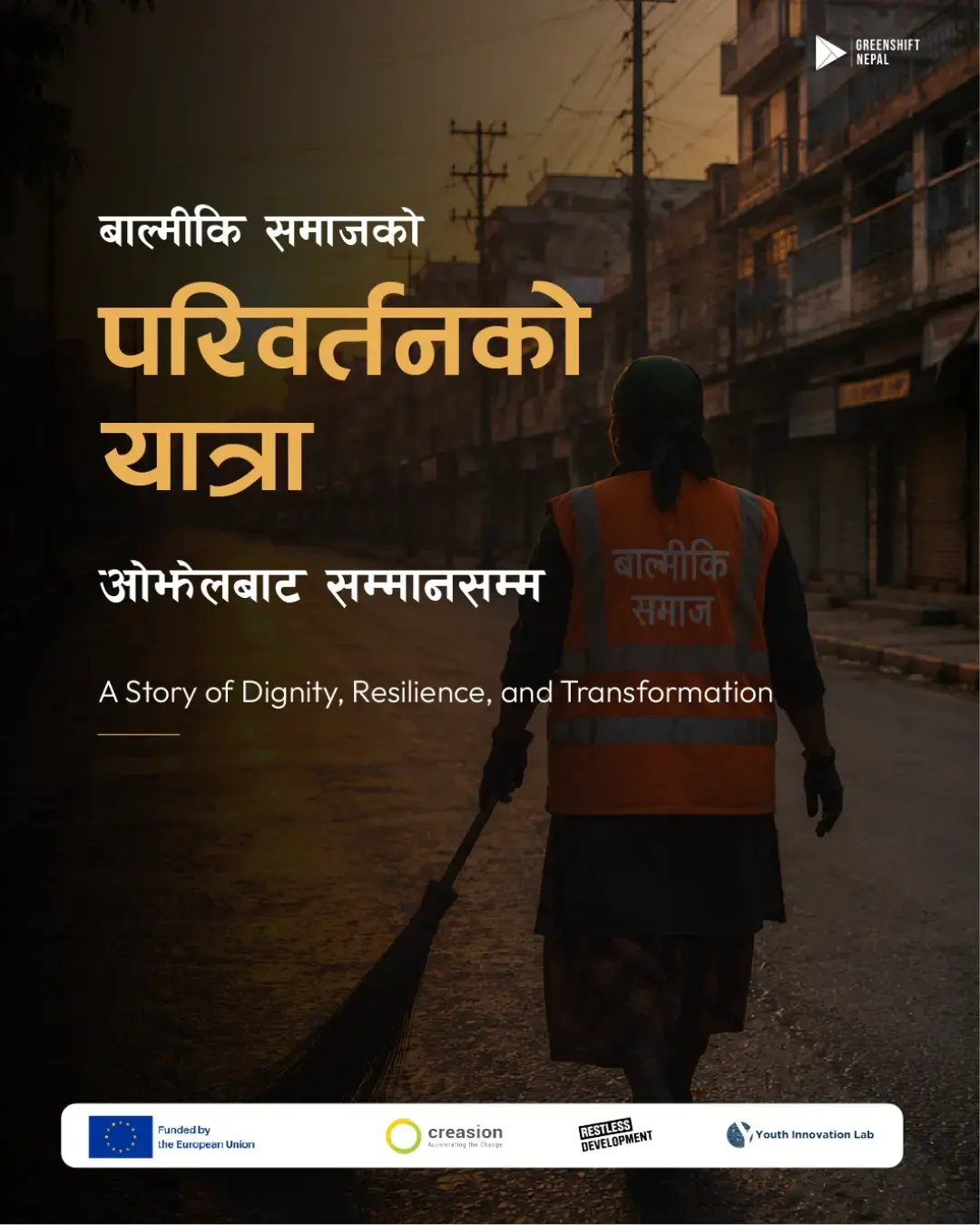
The Journey of Transformation for the Balmiki Community: From Obscurity to Dignity
Creasion Nepal | 2026-06-30Every morning, while Nepalgunj is still asleep, its streets remain quiet and empty. Most people are still lost in their dreams. Yet, at this very hour, a few hands have already begun their day - hands that sweep the streets, alleys, drains, and public spaces long before the city wakes up.
Stepping into the chilly morning air with brooms in hand, these individuals are members of the Balmiki community. For generations, they have carried out some of the city's most hazardous work, including waste collection and septic tank cleaning. Their labour has helped keep Nepalgunj clean, healthy, and liveable. Yet, despite their essential contribution, society rarely gave them the respect they deserved. Their work was visible, but they remained unseen.
"We were necessary for the city, but invisible to society," recalls Jagdish Balmiki.
For years, they were deprived of social security, access to healthcare, and labour rights. Collecting waste with bare hands and working among medical waste, broken glass, foul-smelling drains, and constant exposure to infectious hazards was part of their daily reality. The fear of disease and accidents was a constant companion.
Their financial situation was equally challenging. The income earned from sanitation work was barely enough to support their families. As they had to begin work early each morning, many women had little time to care for their children. This directly affected children's education and upbringing, forcing many to leave school early.
Educational attainment within the community remained extremely low. Fewer than five percent of Balmiki men and women were able to read and write basic text. Yet, they all shared one dream that their children would never have to endure the same hardships they had faced.
A Turning Point: Organisation and Empowerment
Amid years of struggle and hope, Balmiki Samaj Nepal emerged as a catalyst for change. Registered as a civil society organisation in 2072 BS (2015/16 AD), it began advocating for the rights, safety, and dignity of sanitation workers. Although the organisation was formally established later, the community itself had been engaged in this profession for generations.
Balmiki Samaj Nepal organised community members, conducted training on waste management and waste segregation, and strengthened the workers' professional identity. Gradually, the community began to see waste differently - not simply as something to be discarded, but as a valuable resource that, when managed properly, could create economic opportunities.
A significant turning point came when Balmiki Samaj Nepal received support under the GreenShift Nepal Project, funded by the European Union and implemented by CREASION. This support enabled the community to strengthen its organisation, advocate more effectively for workers' rights, safety, and dignity, and expand its membership.
Community members who once felt pushed to the margins of society are now building their identity with confidence. A renewed sense of pride and self-worth has begun to take root. Many who once viewed sanitation work as a burden now see it as an essential service that protects public health and the environment.
"There is a huge difference between where we were yesterday and where we are today," says Jagdish Balmiki. "Before, we were only worried about finding our next meal. Today, we are planning for our future."
From Hazardous Work to Health, Safety, and Recognition
Through the GreenShift Nepal Project, community members received Personal Protective Equipment (PPE), including gloves, gumboots, and safety jackets. For people who had spent years handling hazardous waste with bare hands, these were far more than protective gear - they were life-saving shields.
"Earlier, we worked under the constant fear of disease and accidents," says Jagdish Balmiki. "Today, at least we feel that our lives have value."
Regular awareness programmes have also improved the health and well-being of hundreds of community members and their families. At the same time, small savings groups and cooperatives have encouraged a culture of saving, helping families gradually break free from cycles of debt.
One of the community's greatest achievements has been receiving formal recognition from Nepalgunj Sub-Metropolitan City. Waste pickers and sanitation workers, who had worked informally for decades, are now recognised as essential contributors to the city's green economy. This recognition is more than an official acknowledgement; it represents the dignity they had sought for generations.
A Vision for the Future
Today, children from many Balmiki families are attending school. Their aspirations are no longer limited to survival. Some dream of becoming teachers; others, nurses, engineers, or professionals in other fields. The community has begun taking meaningful steps to break the intergenerational cycle of poverty.
The community's vision has also expanded. Balmiki Samaj Nepal now aims to establish organised enterprises in waste collection, waste segregation, and recycling. They believe these initiatives will not only strengthen environmental conservation but also improve the community's long-term economic security.
Challenges remain. Irregular income, limited access to social protection, women's health issues, and the long-term financial sustainability of the organisation continue to require attention. Yet, despite these challenges, the community remains optimistic.
They have learned that unity creates strength, organisation creates opportunity, and lasting change is possible when people stand together for dignity and their rights.
Guardians of the Environment
Every morning, the streets of Nepalgunj appear clean. Yet beneath that cleanliness lies a story of struggle, perseverance, sacrifice, and hope. Bringing those stories into the light is the mission of Balmiki Samaj Nepal.
Today, its members are far more than sanitation workers. They are guardians of the city's environment, protectors of public health, and champions of change.
The hands that once remained hidden in the shadows are now rising with dignity, confidence, and hope. Their work is about far more than managing waste. It is a quiet but essential service that keeps communities cleaner, healthier, and safer.
Today, that service is finally receiving the recognition and respect it has always deserved.
Blogs
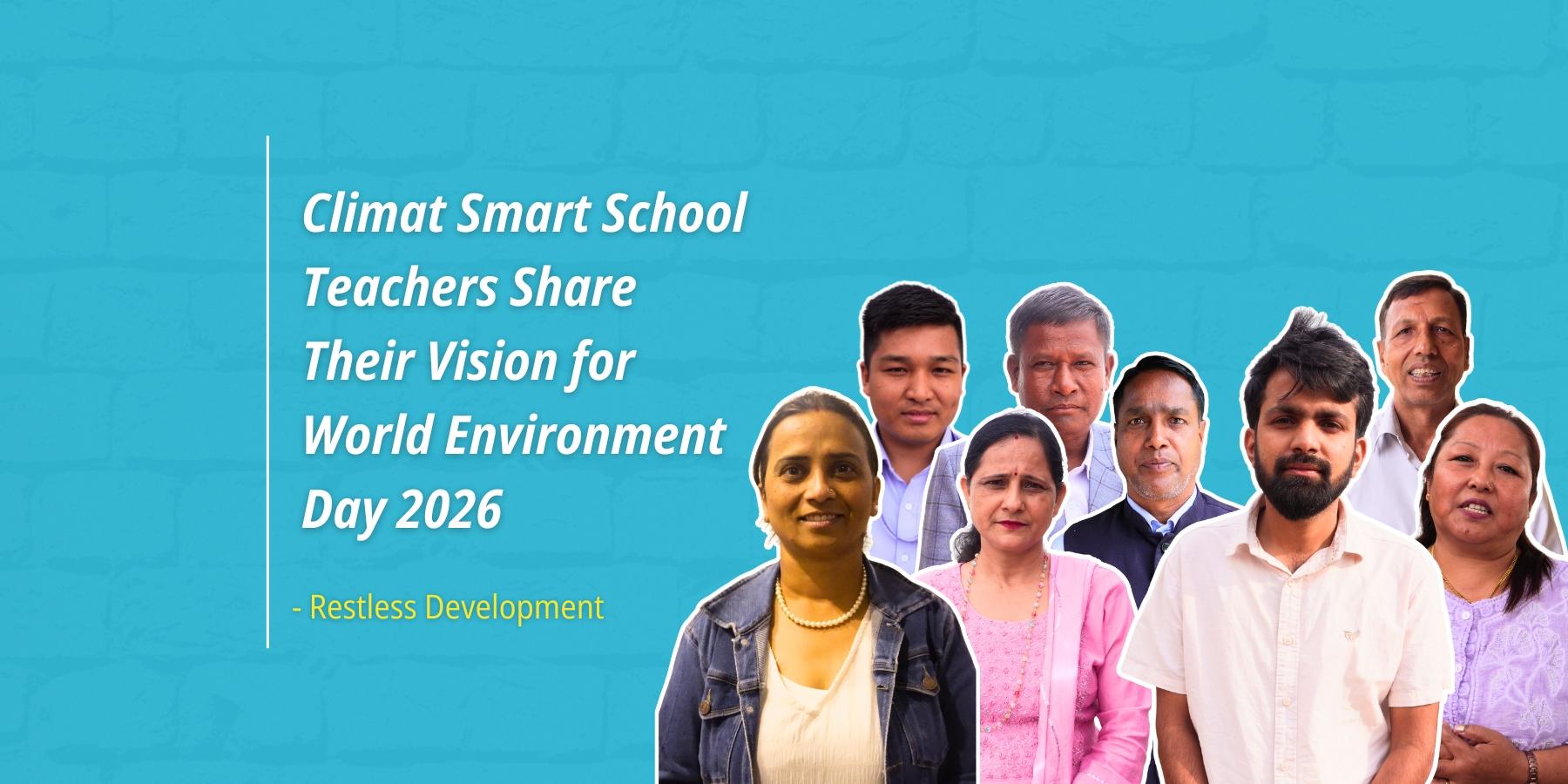
Climate Smart School Teachers Share Their Vision for World Environment Day 2026
Restless Development | 2026-06-14Every meaningful environmental movement begins with a vision.
As part of World Environment Day 2026, we invited teachers and principals from the 12 Climate Smart Schools onboarded during Year 3 of the GreenShift Nepal project to answer one simple question:
"What change do you envision for your school?"
Their responses reveal a shared commitment to creating cleaner schools, empowering students to become environmental leaders, and embedding climate action into everyday learning. While each school has its own context and priorities, together these educators paint a compelling picture of what a climate smart school can become.
Building cleaner, greener schools
For many educators, the vision starts with creating learning environments that are clean, green, and free from pollution.
At Shree Ranikhola Secondary School in Chitwan, Shivanath Praja wants students to understand that caring for the environment is everyone's responsibility.
"I want our school to be clean, green, and free from plastic pollution. I also hope that every student, from the earliest grades to Grade 10, understands their responsibility in addressing climate change and adopts positive practices that create a meaningful impact both in school and in the wider community." - Shivanath Praja
A similar aspiration is shared by Shyam Lal Chaudhary, Principal of Shree Janata Secondary School Bhaireganj Belha in Saptari.
"We envision a school that is always green, clean, and environmentally friendly. We are also committed to equipping future generations of students with the knowledge and skills needed to protect the environment." - Shyam Lal Chaudhary
For Durga Sapkota, Principal of Shree Bhulke Secondary School in Rupandehi, the vision is about creating a learning environment where sustainable behaviours become second nature.
"I want every student in our school to adopt environmentally responsible behaviours and help build a pollution free, plastic free learning environment. I hope they will use what they learn to make a positive contribution to their communities and the nation." - Durga Sapkota
Together, these educators remind us that a climate smart school is not defined only by its infrastructure, but by the values and behaviours students develop every day.
Turning waste into opportunity
Waste management emerged as another common priority. Teachers see it as one of the most practical ways students can begin taking climate action.
Sharada Pandey, a teacher at Shree Shanti Model Secondary School in Rupandehi, hopes students become champions of responsible waste management.
"I want our students to become champions of cleanliness and environmental stewardship by properly separating biodegradable, non biodegradable, recyclable, and reusable waste, and by promoting these practices in their schools, homes, and communities." - Sharada Pandey
For Baburam Acharya, Principal of Shree Janajyoti Secondary School in Rupandehi, tackling plastic waste starts with responsible action at the source.
"Plastic waste is one of the major contributors to climate change. I want to inspire students and parents to manage waste responsibly from its source, creating positive change in both our school and the wider community." - Baburam Acharya
Teachers also see waste as an opportunity for innovation rather than simply something to throw away.
Indramaya Lama, a teacher at Shree Triveni Barah Secondary School in Chitwan, believes students can become role models by embracing circular economy practices.
"I hope our students will go beyond creating change within their schools, families, and communities. I want them to transform waste into value through circular economy practices and become role models for others." - Indramaya Lama
Similarly, Manoj Chalise, a teacher at Shree Bhulke Secondary School, wants students to apply what they learn beyond the classroom.
"I want to see my students apply what they have learned in their communities and take leadership roles in environmental conservation and the promotion of a circular economy." - Manoj Chalise
These reflections show that climate education is not only about reducing waste. It is about helping young people recognise opportunities to reuse resources, solve problems, and inspire others.
Students as environmental champions
Across every conversation, one message stood out clearly. Teachers believe students have the power to become leaders of environmental change.
For Ram Babu Yadav, Principal of Bhawani Prasad Sakal Prasad Ram Prasad Janta Secondary School in Saptari, creating a model green school requires everyone to work together.
"Our goal is to transform our school into a model green school within Khadak Municipality. By mobilising available resources and working together with students and parents, we are committed to making this initiative a success. We want our students to become active environmental advocates who inspire positive change at home, in their communities, and in the future as leaders." - Ram Babu Yadav
This belief is echoed across all the participating schools. Whether students are learning to segregate waste, reduce plastic use, embrace circular economy practices, or care for their local environment, teachers see them as the driving force behind lasting environmental change.
A shared vision for the future
Although each educator shared a unique perspective, their aspirations point toward a common future. They envision schools where environmental responsibility becomes part of everyday learning, where students put knowledge into practice, and where climate action extends beyond school grounds into homes and communities.
The Climate Smart Schools Initiative under GreenShift Nepal is helping schools take meaningful steps toward that future by equipping teachers and students with practical knowledge and opportunities to lead environmental action.
This World Environment Day, these voices remind us that creating a more sustainable future starts in our classrooms. As Sharada Pandey hopes, students can become "champions of cleanliness and environmental stewardship." As Ram Babu Yadav envisions, they can grow into "active environmental advocates." And as Indramaya Lama encourages, they can "transform waste into value" and inspire those around them.
When teachers nurture these values and students carry them into their homes and communities, schools become powerful catalysts for lasting environmental change.
In Their Own Words
Discover the voices behind the Climate Smart Schools Initiative and hear what they envision for the future of their schools.
🎥 Watch the full World Environment Day video here
GreenShift Nepal is funded by the European Union and led by CREASION, with consortium partners Restless Development Nepal and Youth Innovation Lab.
Blogs
My Experience Conducting Training for Youth Advocacy Grant Participants
Ram Kumar Ramtel | 2026-05-26Working with the selected youth groups under the GreenShift Nepal Project’s Youth Advocacy Grant has been one of the most meaningful experiences of my journey so far. From the first session itself, I could feel a strong sense of energy and curiosity among the young participants. Their enthusiasm to learn, ask questions, and share ideas created an environment that was both inspiring and engaging.
What made these sessions particularly rewarding was the active participation of the youth throughout the process. The learning did not happen through one-way discussions. Instead, the sessions became spaces where ideas were exchanged, experiences were shared, and young people learned from one another. Through group activities, discussions, and practical exercises, participants gradually became more comfortable expressing their thoughts and perspectives.
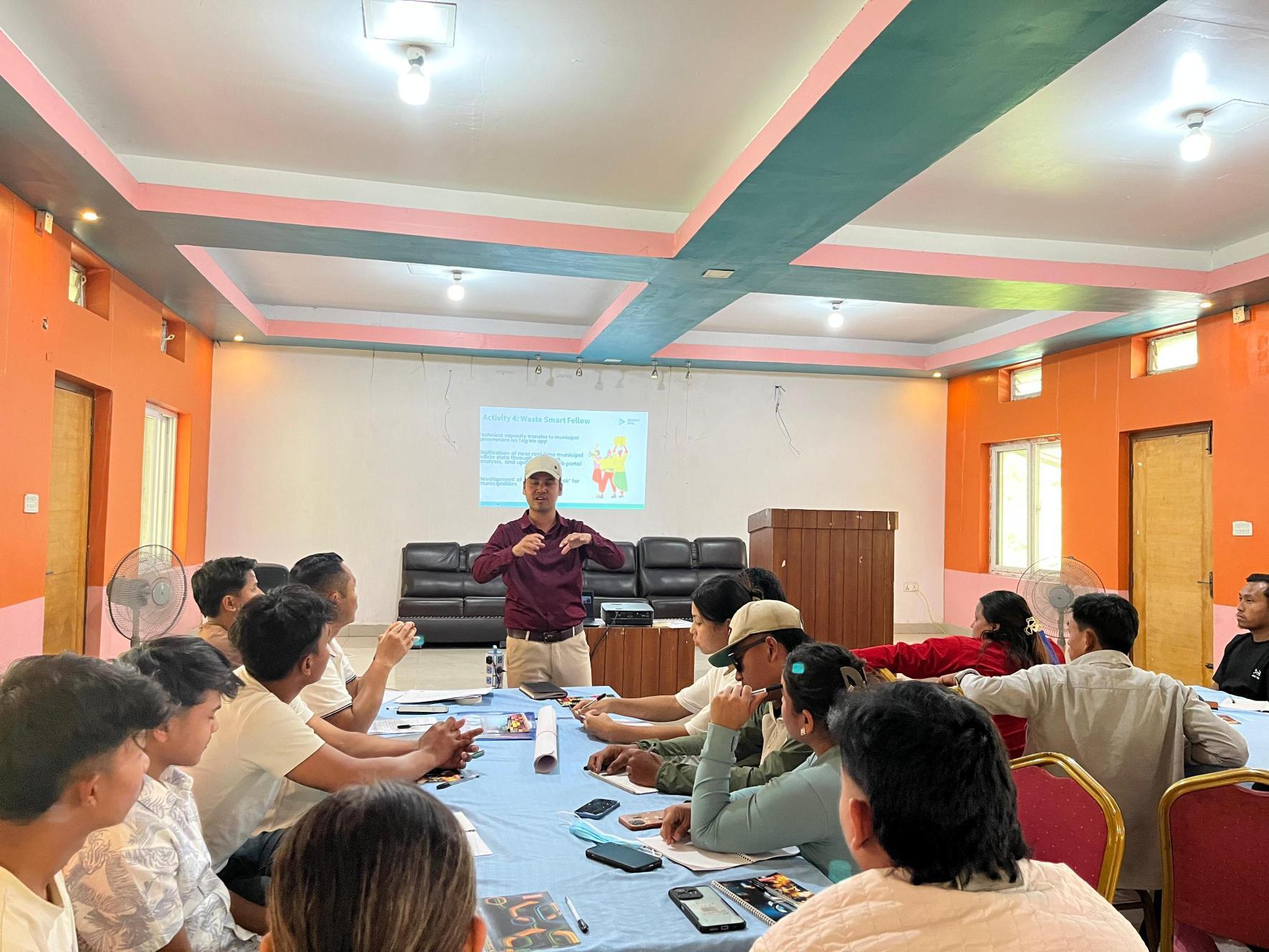
One of the most memorable experiences for me was working with the youth group from Ichchhakamana. During the initial sessions, many participants hesitated to speak and seemed unsure about sharing their ideas in front of others. Confidence appeared to be one of the biggest challenges. However, as the sessions continued, I witnessed a remarkable transformation. The same individuals who once remained silent slowly began contributing during discussions, participating actively in activities, and confidently presenting their ideas in front of the group. Watching that change happen was genuinely rewarding because it reflected something much deeper than learning new skills; it reflected the growth of self-belief and courage.
Throughout the training, I also observed strong teamwork and a genuine willingness among participants to support one another. Their openness, positivity, and commitment showed that when young people are provided with the right opportunities and guidance, they are capable of creating meaningful change.
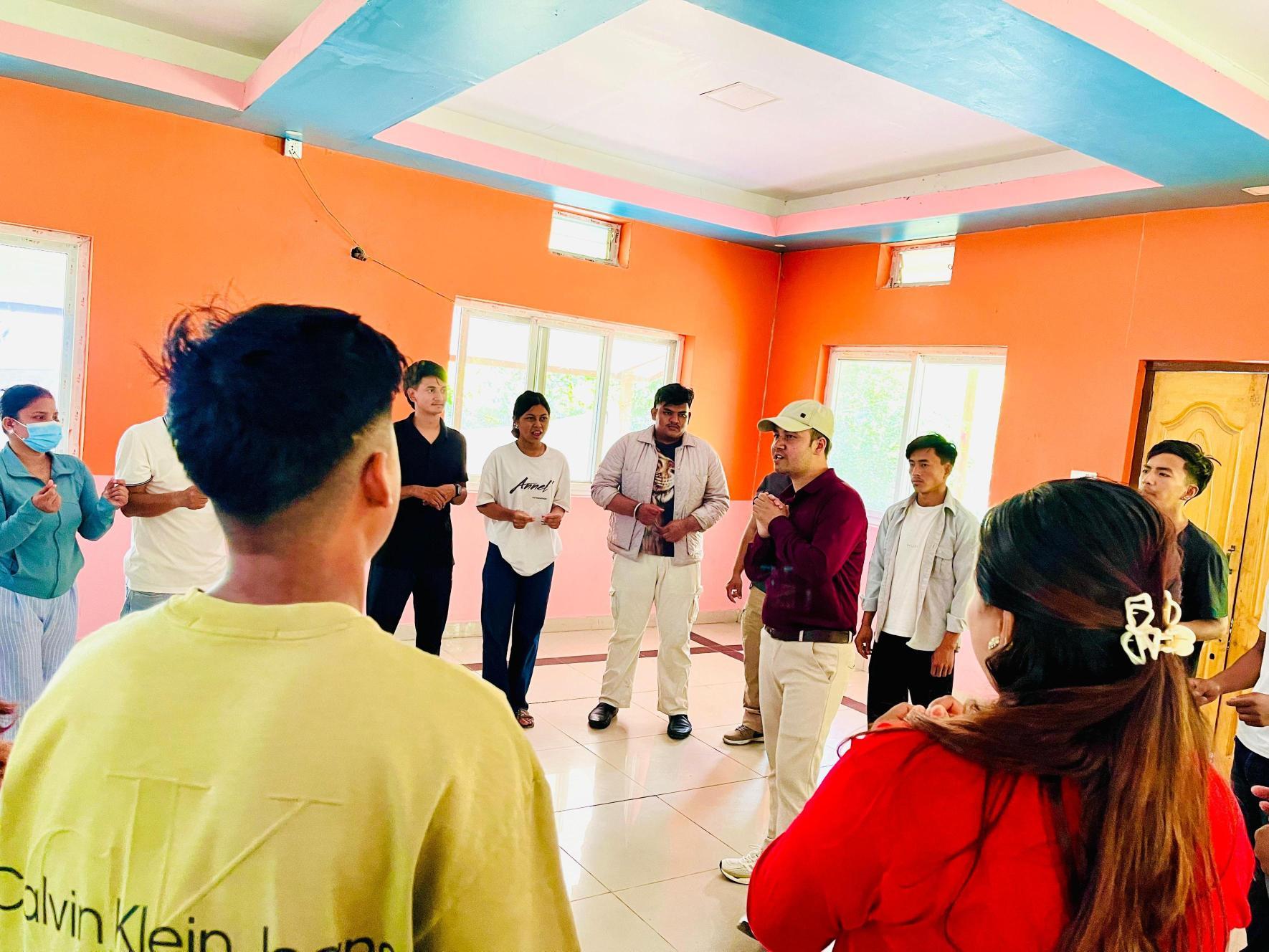
The experience concluded with a strong sense of achievement for everyone involved. More importantly, it reinforced my belief that youth are not just future leaders; they are already powerful agents of change today. With the right support and opportunities, they can transform not only themselves but also contribute positively to their communities and beyond.
Blogs
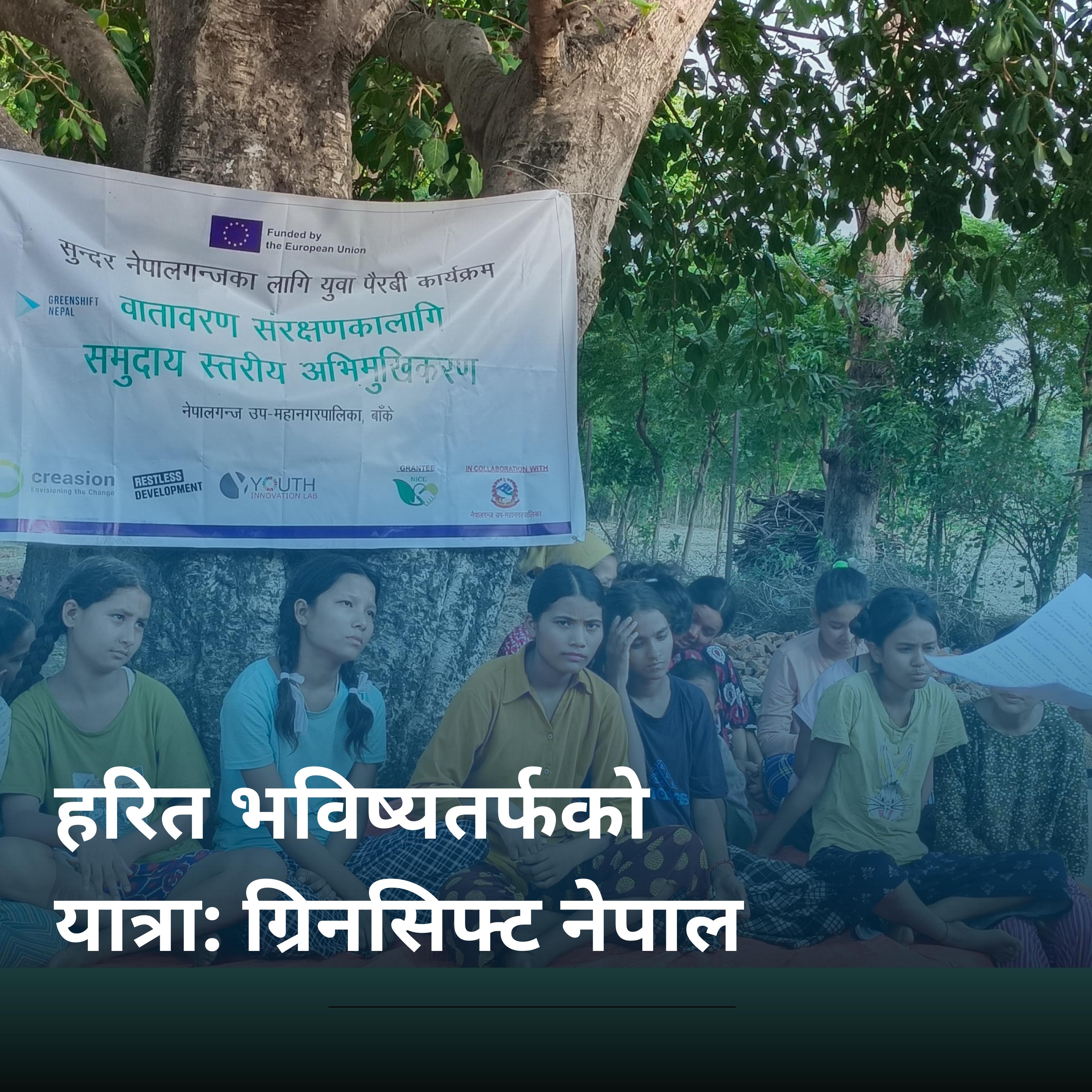
हरित भविष्यतर्फको यात्रा: ग्रिनसिफ्ट नेपाल
Media and Outreach Officer | 2026-04-28जलवायु परिवर्तन, वातावरणीय प्रदूषण र प्लास्टिक फोहोरको बढ्दो समस्या आज विश्वव्यापी चिन्ताको विषय बनेको छ। नेपालजस्तोविकासोन्मुख देशमा यसको असर अझ गहिरो रूपमा देखिन थालेको छ। यही सन्दर्भमा GreenShift (हरित परिवर्तन) को अवधारणा अत्यन्तैमहत्वपूर्ण छ। ग्रिनसिफ्ट (GreenShift) भन्नाले वातावरणमैत्री सोच, व्यवहार र प्रणालीतर्फको समग्र रूपान्तरणलाई जनाउँछ। यो केवलनीतिगत कुरा मात्र होइन, हाम्रो दैनिकी, शिक्षा, युवाको भूमिका र स्थानीय तहको सक्रियतासँग गहिरो रूपमा जोडिएको विषय हो।
हरित दिशातर्फ सर्ने आवश्यकता : नेपालमा प्लास्टिक प्रयोग दिनप्रतिदिन बढ्दो क्रममा छ। एकपटक प्रयोग हुने प्लास्टिक झोला, बोतल, प्याकेजिङ सामग्रीले नदी, जंगल, खेतीयोग्य जमिन र मानव स्वास्थ्यमा गम्भीर असर पारिरहेको छ। यदि अहिले नै GreenShift अपनाइएनभने भविष्यका पुस्ताले स्वच्छ वातावरण पाउने सम्भावना कमजोर हुँदै जानेछ। त्यसैले हरित जीवनशैली अपनाउनु विकल्प होइन, बाध्यताबनेको छ।
युवाको भूमिका: परिवर्तनका संवाहक : ग्रिनसिफ्ट अभियानमा युवा पुस्ताको भूमिका सबैभन्दा निर्णायक हुन्छ। युवा ऊर्जाशील, सिर्जनशीलर परिवर्तनप्रति खुला हुन्छन्। वातावरण संरक्षण, प्लास्टिक न्यूनीकरण र पुनःप्रयोग (recycling) जस्ता अभ्यासमा युवाले नेतृत्व लिन सक्छन्।
विद्यालय, कलेज र समुदायमा युवाले सचेतना अभियान सञ्चालन गर्न सक्छन्। प्लास्टिक नप्रयोग गर्ने अभियान, कपडाको झोला प्रयोग, सरसफाइ कार्यक्रम, वृक्षरोपण र वातावरणीय क्लबहरू गठन गरेर युवाले व्यवहारिक परिवर्तन ल्याउन सक्छन्। सामाजिक सञ्जालमार्फतGreenShift सन्देश फैलाउनु पनि आजको युवाको बलियो माध्यम हो।
विद्यालय तहमा व्यवहार परिवर्तन : ग्रिनसिफ्ट सफल बनाउन विद्यालय तहबाटै व्यवहार परिवर्तन सुरु गर्नु अत्यन्त जरुरी छ। बालबालिकालेसानो उमेरमै वातावरणमैत्री बानी सिके भने त्यो जीवनभर साथ दिन्छ।
विद्यालयमा निम्न अभ्यासहरू अपनाउन सकिन्छ: प्लास्टिक निषेधित विद्यालय घोषणा, पुनःप्रयोग गर्न मिल्ने पानीका बोतल र टिफिन प्रयोग, फोहोर छुट्याउने (सुक्खा र भिजा फोहोर) अभ्यास, वातावरण शिक्षा विषयलाई व्यवहारिक बनाउने, Green Club वा Eco Club गठन तथाशिक्षक, अभिभावक र विद्यालय प्रशासनको सहकार्यमा बालबालिकालाई जिम्मेवार नागरिक बनाउने वातावरण तयार गर्न सकिन्छ।
स्थानीय तहको जिम्मेवारी: नेपालको संघीय संरचनामा स्थानीय तह (नगरपालिका र गाउँपालिका) लाई फोहोर व्यवस्थापनको मुख्यजिम्मेवारी दिइएको छ। त्यसैले ग्रिनसिफ्ट अभियान सफल बनाउन स्थानीय सरकारको भूमिका अत्यन्त महत्वपूर्ण हुन्छ।
स्थानीय तहले एकपटक प्रयोग हुने प्लास्टिकमा प्रतिबन्ध लगाउने नीति बनाउने, फोहोर संकलन, वर्गीकरण र पुनःप्रयोग केन्द्र स्थापना गर्ने, Recycling उद्योगलाई प्रोत्साहन गर्ने, समुदायस्तरमा सचेतना कार्यक्रम सञ्चालन गर्ने, निजी क्षेत्र र युवासँग सहकार्य गर्ने
यदि स्थानीय सरकारले स्पष्ट नीति, बजेट र कार्यान्वयनमा दृढता देखायो भने प्लास्टिक व्यवस्थापन सम्भव छ।
प्लास्टिक पुनःप्रयोग (Recycling): समाधानको बाटो : प्लास्टिक पूर्ण रूपमा हटाउन कठिन भए पनि पुनःप्रयोग र पुनर्चक्रण प्रभावकारीसमाधान हो। प्रयोग भइसकेको प्लास्टिकलाई नयाँ सामग्रीमा रूपान्तरण गरेर वातावरणीय असर घटाउन सकिन्छ। यसले रोजगारी सिर्जनागर्नुका साथै स्थानीय अर्थतन्त्रलाई पनि मजबुत बनाउँछ।
निष्कर्ष मा भन्नुपर्दा, ग्रिनसिफ्ट केवल एउटा अभियान होइन, यो सोच र संस्कृतिको परिवर्तन हो। युवा, विद्यालय र स्थानीय तहको संयुक्तप्रयासबिना हरित भविष्य सम्भव छैन। आज हामीले चाल्ने सानो कदमले भोलिको पुस्तालाई सुरक्षित वातावरण दिन सक्छ। अब समयआएको छ, प्लास्टिकबाट टाढा, हरित जीवनतर्फ नजिक सर्ने।
हरित सोच अपनाऔँ, व्यवहार बदलौँ र ग्रिनसिफ्टलाई हाम्रो जीवनशैली बनाऔँ।
Blogs
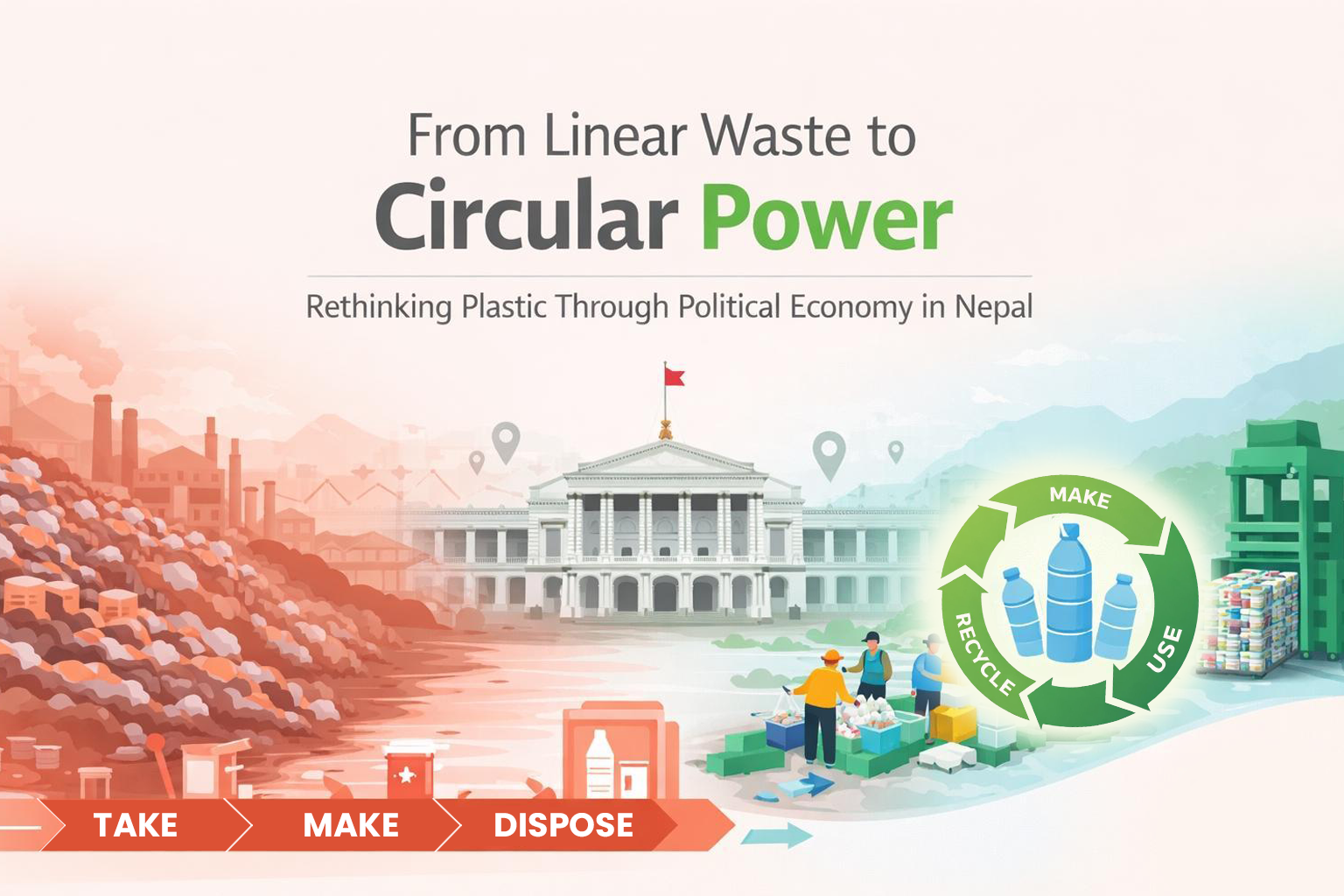
From Linear Waste to Circular Power: Rethinking Plastic through Political Economy in Nepal
| 2026-02-27Plastic waste in Nepal is often seen as a technical challenge, but it is also shaped by governance structures, institutional capacity, and incentive systems. While municipalities manage the operational burden of over 600 metric tonnes of daily plastic waste, producers, policymakers, and informal waste workers each play interconnected roles within the broader value chain.
A political economy perspective helps clarify how responsibilities, costs, and decision-making are distributed across the system. Strengthening coordination between actors rather than focusing only on end-of-pipe solutions is essential for long-term improvement.
Key pathways forward include:
· Recognizing and supporting waste workers in Nepal as part of the formal recycling ecosystem,
· Improving data systems to inform evidence-based plastic recycling policy in Nepal,
· Gradually introducing Extended Producer Responsibility in Nepal to balance roles across the value chain,
Aligning reforms with the Solid Waste Management Act Nepal and national sustainability commitments.
With steady, inclusive reforms, Nepal can transition from a largely linear waste model toward a circular economy approach, one where materials retain value longer and institutions work together more effectively.
From Linear Waste to Circular Power: Rethinking Plastic through Political Economy in Nepal
People in Nepal have different views about plastic waste. Many believe it is just a technical issue - too few recycling plants, weak sorting, and little public awareness. But experience on the ground shows that the problem is deeper. Over the past few years, local projects and community efforts have revealed that fixing plastic waste takes more than new machines or facilities. It involves how decisions are made, who benefits, and whether rules are enforced. By looking at plastic waste with this wider lens, we see why moving to a circular economy is so complex in Nepal.
Nepal’s Linear Plastic System
Nepal’s approach to waste is shaped by the Solid Waste Management Act of 2011, which puts most of the responsibility on local governments. But the story starts even earlier, with plastic being produced and imported before it becomes waste. The World Bank estimated in 2020 that Nepal produces around 600 metric tonnes of plastic waste every day. Much of this ends up in landfills, open dumps, or scattered in the environment, affecting environmental quality and public health.
Waste management in Kathmandu Valley reflects the broader transition Nepal is making toward more coordinated and sustainable systems. As urban areas grow and consumption patterns evolve, there is increasing recognition that waste solutions work best when they address the entire material cycle - from production and use to recovery and reuse. Strengthening upstream design, encouraging responsible consumption, and improving downstream recovery systems can collectively support a more balanced and efficient waste framework. A whole-system perspective allows Nepal to gradually shift from managing waste at the final stage to optimizing material flows throughout the value chain.
The Role of Informal Waste Workers
Waste workers - often called waste pickers - are at the heart of plastic recycling in Nepal. In Kathmandu Valley alone, thousands of people collect bottles, plastic wrappers, and other recyclables before they reach the dump. Although most of these workers are not officially recognized, their daily efforts keep significant volumes of plastic out of landfills. Groups like WIEGO have found that waste pickers in South Asia boost recycling rates, even though they usually don’t have contracts, social security, or proper safety gear. In other countries, like India and Brazil, bringing informal workers into official city systems has improved both recycling and worker protection. Nepal could learn from these examples, making sure that recycling is not just efficient but also fair for those doing the hard work.
Based on what’s happening now, Nepal has several ways to support waste pickers. Local governments could start by registering informal workers, so they can get basic protections and safety training. Cities might work with groups of waste pickers - like cooperatives - to collect trash door-to-door and link them to recycling businesses. Open conversations between workers, city officials, and companies can also help. By learning from cities like Pune in India, Nepal can build a fairer, more effective recycling system that benefits everyone involved.
Extended Producer Responsibility: A Structural Shift
Extended Producer Responsibility (EPR) is increasingly promoted globally as a policy tool to redistribute responsibility across the plastic value chain. The OECD (2016) defines EPR as a policy approach where producers are given significant responsibility, financial and/or physical, for post-consumer products.
EPR is increasingly being discussed as part of Nepal’s broader sustainability dialogue. As policymakers explore policy innovations that align environmental protection with economic development, EPR presents one possible framework for encouraging shared responsibility across the value chain. International experiences demonstrate that when producers are engaged in post-consumer waste management, product design, material efficiency, and recycling systems can evolve in complementary ways. As Nepal continues its policy discussions, adapting such approaches to local realities could contribute to a more coordinated and forward-looking recycling ecosystem.
Data and Governance: Evidence-Based Waste Policy
Effective waste management depends on reliable information and coordinated planning. As Nepal continues modernizing its environmental governance systems, enhancing data collection and monitoring mechanisms can further strengthen decision-making processes. Clearer insights into material flows, recycling rates, and recovery pathways can support municipalities in designing practical regulations, building partnerships with waste workers and businesses, and planning long-term infrastructure investments. Digital tracking tools and improved reporting systems offer opportunities to enhance transparency, efficiency, and collaboration across the sector.
Circular Economy in Practice
The idea of a circular economy is about using materials as long as possible, keeping them valuable instead of throwing them away. Here are some real-world examples:
● Rwanda’s plastic bag ban, which reduced visible plastic litter through regulatory enforcement.
● The European Union’s Circular Economy Action Plan, which integrates eco-design standards and producer responsibility.
● Informal recycler cooperatives in Pune, India, are formally contracted by municipalities to manage door-to-door collection (SWaCH model).
Moving from Linear Waste to Circular Power
To build what some call “circular power,” everyone in the plastic chain - not just those who get rid of waste - needs to take responsibility. In Nepal, this means better teamwork between:
● Producers and importers
● Municipal governments
● Waste workers and recycling enterprises
● Policymakers at the provincial and federal levels
Many policy analyses suggest that Nepal may benefit from a phased approach. First, it’s important to get better data so leaders can make smart choices about reforms. At the same time, including and protecting waste workers can quickly improve recycling and help communities. After that, Nepal can try out new rules like Extended Producer Responsibility, building on early successes and using resources wisely. This careful approach makes it easier for everyone to adapt and benefit from bigger changes in the future.
Plastic waste in Nepal intersects with public finance, environmental protection, and labor inclusion. Analyzing the issue through a political economy perspective complements recycling efforts by highlighting how incentives and governance structures influence outcomes.
Blogs
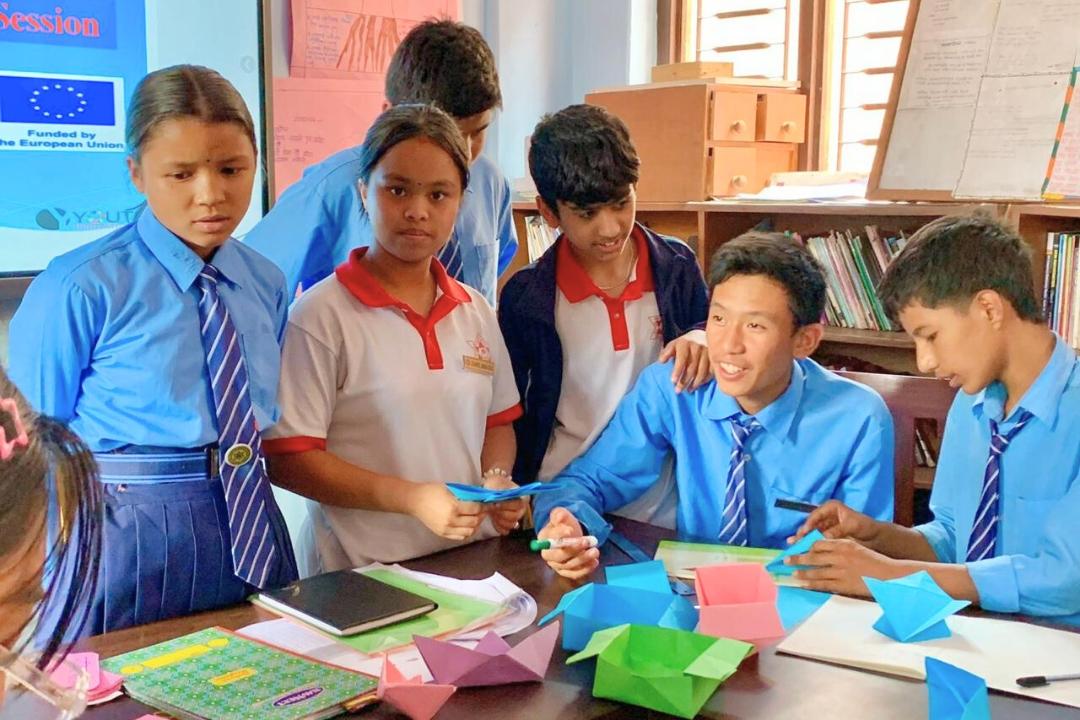
Why schools must be the first classrooms of the circular economy
Restless Development | 2026-02-26Every community changes slowly and then suddenly. In villages and towns across Nepal, plastic waste increasingly finds its way into fields, streets, and rivers. What is often forgotten is that much of this plastic is not truly waste at all. It is material that could still be reused, repurposed, or recycled if people had the knowledge, systems, and motivation to do so.
This is where the idea of a circular economy becomes important. A circular economy encourages people to keep materials in use for as long as possible through reusing, repurposing, and recycling rather than throwing them away after a single use. While policies and infrastructure are important for this transition, one of the most powerful starting points is much closer to home. It is the classroom.
Schools play a unique role in shaping how young people understand the world. What students learn in school does not remain within school walls. It travels with them into their homes, families, and communities. When students understand that materials have value beyond a single use, they begin to question everyday habits and imagine alternatives. In this way, schools become powerful entry points for promoting circular thinking.
In Nepal, schools are also deeply connected to their communities. Parents, teachers, local leaders, and youth often gather around school spaces for meetings, celebrations, and community discussions. When schools introduce ideas such as waste segregation, repair culture, or creative reuse of materials, these ideas quickly spread beyond students and into the wider community.
Young people themselves are naturally creative problem solvers. Given the opportunity, they can turn discarded items into useful objects, develop small environmental initiatives, and inspire their peers. What they often lack is exposure to the concept of circular economy and the encouragement to experiment with it.
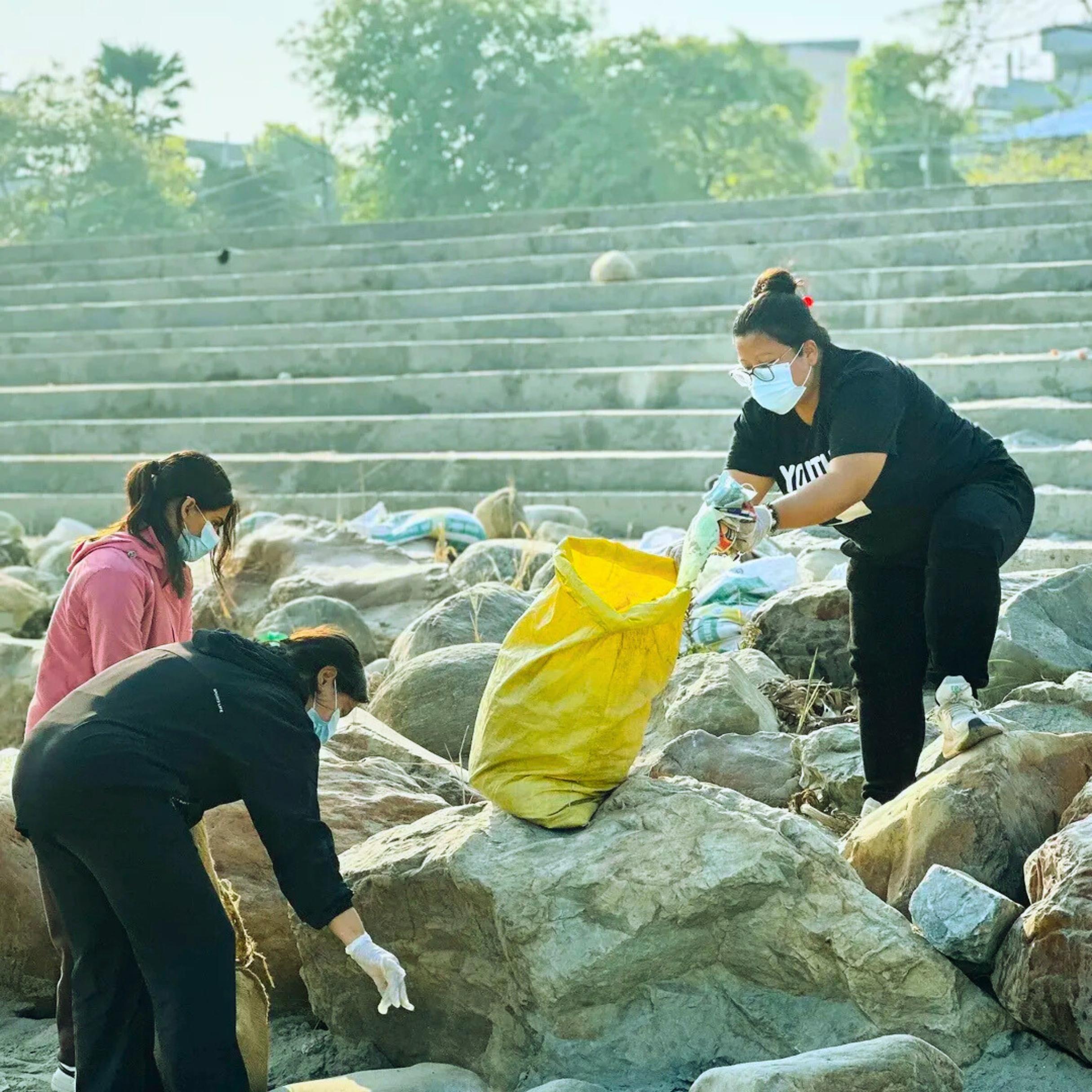
This is exactly where our GreenShift initiative is working to make a difference. Through GreenShift, young people and schools are being oriented on circular economy principles and supported to translate those ideas into practical action. The initiative works with students and youth groups to understand how everyday waste can be transformed into opportunity. GreenShift places a strong focus on youth leadership. Students are not only learning about environmental challenges but also designing solutions themselves. Through various fun learning modules, students explore practical approaches such as segregating waste and creating new products from discarded materials. These experiences help them build both environmental awareness and entrepreneurial thinking.
The initiative also recognizes that circular economy is not only about environmental protection. It is also about livelihoods and dignity. Upcycling materials and creating new products from discarded goods can generate income opportunities for young people and local communities. In a country like Nepal where youth unemployment remains a challenge, these skills can open new pathways for sustainable livelihoods.
Schools are therefore an essential starting point. When students are oriented on circular economy concepts, they begin to carry those ideas home. A student who learns about waste segregation in school might encourage their family to separate organic waste from plastics. A group of students who learn simple repair skills might begin fixing broken school furniture or bicycles. Small actions like these slowly shift community behavior.
Blogs
Why Investing in Youth Is Key to Nepal’s Circular Economy
Restless Development | 2026-02-02On most mornings in Nepal, it does not take long to see the waste problem. A walk by a riverbank, a roadside drain, or a nearby field is enough. Plastic bags drift in the water. Empty packets collect in corners. Smoke rises where someone has decided burning waste is the easiest option. As cities grow and consumption increases, waste is piling up faster than systems can handle it. The problem is often not the material itself. It is the lack of systems, knowledge, and local ownership to deal with it differently.
This is where the idea of a circular economy becomes important. Instead of treating materials as something to use once and throw away, a circular economy focuses on keeping resources in use for as long as possible. Waste is reduced, materials are reused or recycled, and products are designed to last longer. For cities struggling with growing waste, this shift can make a real difference.
But policies and infrastructure alone will not build a circular economy. Change also depends on people who are willing to experiment with new practices and influence their communities. In Nepal, much of that energy comes from young people.
It is true that many young people leave the country for higher education or work. Yet across Nepal there are also youth-led CSOs and CBOs that have chosen to stay and build solutions at home. In recent years, many of these groups have started working on issues connected to the circular economy, from waste reduction campaigns to recycling initiatives and community awareness programs.
What makes these youth-led groups important is their connection to the places where they work. They understand the local waste challenges, the habits of communities, and the informal systems that already exist. They know the municipalities, the local businesses, and the community leaders who can help move ideas forward. This kind of local knowledge is difficult to replicate from the outside.
Investing in youth-led CSOs therefore becomes an important step in promoting circular economy practices in Nepal. With the right support, these groups can mobilize communities, test practical ideas, and build local solutions that reduce waste and keep materials in circulation.
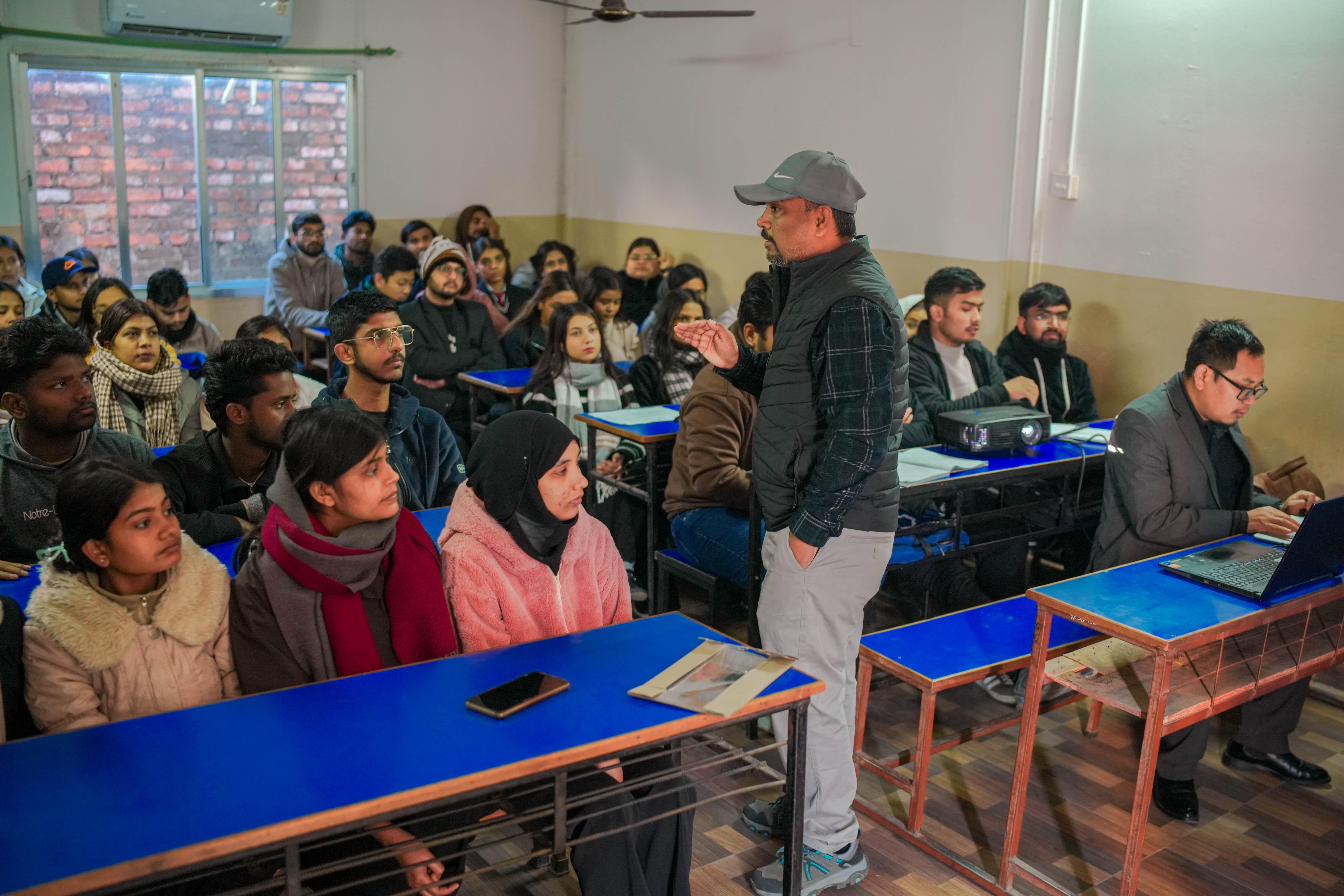
One example of this approach is the GreenShift project, which supports young people and youth led organizations to promote circular economy practices in their communities. Through small grants and mentorship, youth groups are able to test ideas that respond to local waste challenges.
Some organize community campaigns that encourage households to separate waste. Others run workshops in schools that show students how everyday materials can be reused or repurposed. In some places, youth groups work with municipalities and local businesses to promote recycling and reduce single use plastics.
These efforts may seem modest at first, but they help shift how communities think about waste. When people begin separating materials, repairing items, or reducing plastic use, the amount of waste entering rivers, fields, and dumpsites slowly begins to decline.
More importantly, these initiatives build local leadership. Young people learn how to organize communities, work with local governments, and turn ideas into action. Over time, this creates a network of youth leaders who are actively shaping how their towns and cities manage resources.
For a country like Nepal, where waste systems are still developing and cities are expanding quickly, these kinds of local efforts matter. Investing in youth led organizations does not just support environmental action today. It helps build the foundation for a circular economy that communities themselves can sustain in the future.
Blogs
प्लास्टिकमुक्त नेपालतर्फको यात्रा हाम्रो मौलिक ज्ञान: दिगो प्याकेजिङ र हरित व्यवसाय प्रवर्द्धन
| 2026-01-30आज नेपाल प्लास्टिक प्रदूषण, जलवायु परिवर्तन र वातावरणीय असन्तुलनजस्ता गम्भीर समस्याको सामना गरिरहेको छ। सहरका सडकदेखि गाउँका खोल्सासम्म, हिमालका पदमार्गदेखि खेतबारीसम्म प्लास्टिक फोहोर फैलिएको देखिन्छ। यस्तो अवस्थामा दिगो प्याकेजिङ (Sustainable Packaging) र हरित व्यवसाय (Green Business) को प्रवर्द्धन अपरिहार्य बनेको छ। यस अभियानलाई सफल बनाउन युवाहरूको भूमिका अत्यन्त महत्वपूर्ण छ, किनभने परिवर्तनको ऊर्जा, चेतना र नेतृत्व युवामै निहित हुन्छ।
युवाहरू समाजका सबैभन्दा सक्रिय, सिर्जनशील र परिवर्तनशील समूह हुन्। नयाँ सोच, प्रविधि र नवप्रवर्तनलाई चाँडो आत्मसात गर्ने क्षमता युवाहरूमै हुन्छ। दिगो प्याकेजिङको सन्दर्भमा युवाहरूले प्लास्टिकको विकल्प खोज्ने, स्थानीय स्रोतमा आधारित सामग्री प्रयोग गर्ने, र वातावरणमैत्री उत्पादनलाई बजारसम्म पुर्याउने काममा नेतृत्व लिन सक्छन्। बाँस, जूट, लोक्ता, कपडा र माटोजस्ता स्थानीय सामग्रीलाई आधुनिक डिजाइन र प्याकेजिङसँग जोड्ने काम युवाहरूले प्रभावकारी रूपमा गर्न सक्छन्, जसले हरित व्यवसायलाई गति दिन्छ।
युवाहरूले वातावरण संरक्षणका लागि दिगो अभ्यास (Sustainable Practices) अपनाउनु र त्यसबारे स्थानीय तहमा वकालत (Advocacy) र जनचेतना फैलाउनु किन आवश्यक छ भन्ने प्रश्न पनि उत्तिकै महत्वपूर्ण छ। वातावरणीय समस्या केवल सरकार वा संस्थाको जिम्मेवारी मात्र होइन, यो प्रत्येक नागरिकको साझा दायित्व हो। युवाहरू सामाजिक सञ्जाल, विद्यालय, कलेज, युवा क्लब, सामुदायिक समूह र स्थानीय मञ्चहरू प्रयोग गरेर प्लास्टिक न्यूनीकरण, फोहोर व्यवस्थापन र दिगो उपभोगबारे सशक्त सन्देश फैलाउन सक्छन्। उनीहरूको आवाज प्रभावशाली हुन्छ र समुदायमा व्यवहार परिवर्तन गराउन सक्षम हुन्छ।
स्थानीय तहमा युवाहरूको सक्रियताले नीति निर्माण र कार्यान्वयनमा पनि सकारात्मक प्रभाव पार्न सक्छ। स्थानीय सरकारलाई प्लास्टिक नियन्त्रणसम्बन्धी नियम कडा बनाउन, दिगो प्याकेजिङलाई प्रोत्साहन गर्ने कार्यक्रम ल्याउन र हरित उद्यमलाई सहयोग गर्न दबाब सिर्जना गर्न युवाहरूले भूमिका खेल्न सक्छन्। यसरी युवाहरू केवल सचेत नागरिक मात्र होइन, स्थानीय विकासका साझेदारका रूपमा पनि स्थापित हुन सक्छन्।
यसका साथै, दिगो प्याकेजिङ र वातावरण संरक्षणसम्बन्धी ज्ञानलाई स्थानीय तहका आधारभूत विद्यालयको पाठ्यक्रममा अतिरिक्त ज्ञान (Supplementary Knowledge) का रूपमा समावेश गर्नु अत्यन्त आवश्यक छ। बाल्यकालमै वातावरणप्रतिको जिम्मेवारी बोध गराउन सकियो भने दीर्घकालीन व्यवहार परिवर्तन सम्भव हुन्छ। विद्यालय स्तरमै प्लास्टिकको हानी, दिगो विकल्प, स्थानीय मौलिक ज्ञान र हरित अभ्यासबारे शिक्षा दिइएमा विद्यार्थीहरू जिम्मेवार नागरिकका रूपमा विकास हुन्छन्।
युवाहरू यस शैक्षिक अभियानका सेतु (bridge) बन्न सक्छन्। उनीहरूले विद्यालयमा सचेतना कार्यक्रम सञ्चालन गर्न, कार्यशाला, चित्रकला, निबन्ध, बहस तथा सरसफाइ अभियानजस्ता गतिविधि आयोजना गर्न सक्छन्। यसले विद्यार्थीमा व्यवहारिक ज्ञान बढाउनुका साथै समुदायमा सकारात्मक सन्देश पनि फैलाउँछ। साथै, स्थानीय स्तरका विद्यालयमा यस्तो ज्ञान समावेश गर्दा अभिभावक र समुदायसमेत सचेत बन्छन्, जसले दिगो अभ्यासलाई सामाजिक आन्दोलनको रूप दिन सक्छ।
नेपालको सन्दर्भमा मौलिक ज्ञान र परम्परागत अभ्यास दिगोपनका उत्कृष्ट उदाहरण हुन्। पातको टपरी, डोको–नाम्लो, माटाका भाँडा र कपडाका झोलाजस्ता अभ्यासलाई विद्यालय शिक्षा र युवा अभियानसँग जोड्न सकेमा हाम्रो संस्कृति र वातावरण दुवै जोगाउन सकिन्छ। युवाहरूले आधुनिक सोच र परम्परागत ज्ञानबीच पुलको काम गर्न सक्छन्।
अन्ततः, दिगो प्याकेजिङ र हरित व्यवसाय प्रवर्द्धन केवल वातावरण जोगाउने उपाय मात्र होइन, यो आर्थिक अवसर, सांस्कृतिक संरक्षण र भविष्य निर्माणको आधार पनि हो। युवाहरू यस परिवर्तनका मुख्य संवाहक हुन्। स्थानीय तहमा सचेतना, वकालत र शिक्षा मार्फत युवाहरूले वातावरण संरक्षणलाई अभियानको रूप दिन सक्छन्। आज युवाले चालेको सानो कदमले भोलिको नेपाललाई स्वच्छ, हरित र दिगो बनाउन ठूलो योगदान पुर्याउनेछ।
Field Stories
The Story of Saral Nepal and the Power of Local Action
Restless Development | 2026-01-02The Hands That Weave Change
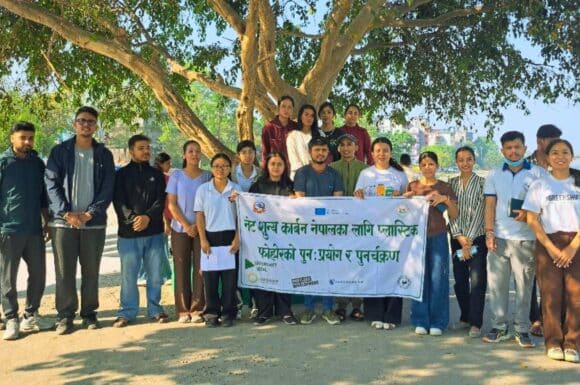
In the neighborhoods of Bharatpur, a dedicated group of young people known as Saral Nepal saw a problem that many had simply learned to accept: a landscape increasingly cluttered by plastic. As a local civil society organization, they had the passion to change things but needed a catalyst to scale their vision. That spark arrived when they partnered with the EU-funded GreenShift Project. With a Youth Advocacy Grant of NPR 2 Lakhs, these young leaders set out to prove that waste is really just a resource in the wrong place.
Connecting with the Heart of the Community
The team knew that real change doesn’t happen through posters alone, so they traveled to remote areas like Bharlang where waste services are often out of reach. They sat down with residents to talk about how plastic pollution affects their health and their children’s future. By using the TagMe app (a mobile tool that allows users to map, tag, and document waste hotspots in their community) to visualize the problem and hosting interactive discussions, Saral Nepal helped the community see their surroundings through a new lens. They turned the abstract idea of a circular economy into a practical conversation about protecting the land they love.
"We always believed that plastic waste was not just an environmental issue, but a leadership issue. Once young people see themselves as problem-solvers rather than bystanders, real change becomes possible."
- Manish Poudel, Founder and President of Saral Nepal
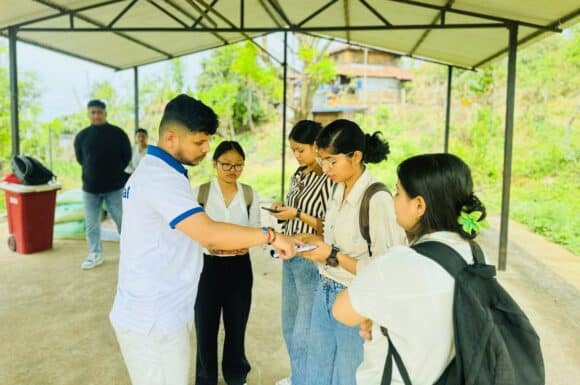
From Riverbanks to Resilient Streets
The energy shifted from conversation to action as the youth group mobilized hundreds of volunteers for massive cleanup drives. From the streets of Namuna Tol to the vital banks of the Narayani and Rapti rivers, neighbors worked side by side to reclaim their environment. Together, they removed hundreds of kilograms of waste and installed dustbins to ensure the change would last. These events became a source of community pride, where the act of picking up litter became a powerful statement of ownership and care for their shared home.
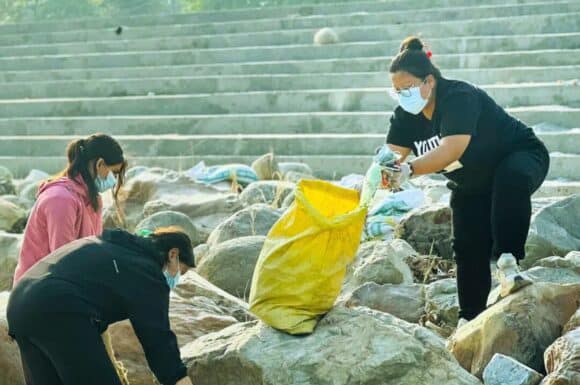
Crafting New Livelihoods
This vision of turning waste into value came to life beautifully through the Women’s Handicraft Training Program which Saral Nepal organized. Thirty local women gathered to learn how to upcycle household plastic into traditional Nepali crafts like Dhakiya and Chakati. This wasn’t just about recycling; it was about empowerment. By turning discarded plastic into beautiful, sellable goods, these women were empowered to create new livelihoods while keeping their neighborhoods clean, proving that environmental care can also support a family’s future.
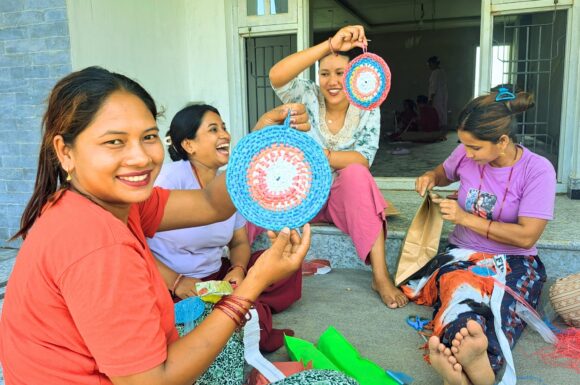
Bridging the Gap with Local Leaders
Saral Nepal understood that for their work to last, they needed the city on their side. They organized a major dialogue at City Hall, bringing together the Deputy Mayor, city officials, and police to talk about the future of waste. It was a powerful moment of bridge building where young activists and government leaders sat at the same table. The city officials were so impressed by the group’s use of technology and grassroots energy that they pledged to explore new ways to integrate these youth-led ideas into the city’s official plans.
"The dialogue with local government leaders showed that young people don’t just demand change; they can design it. Being taken seriously by decision-makers was a milestone for us."
- Rupak Ghimire, Central Member of Saral Nepal
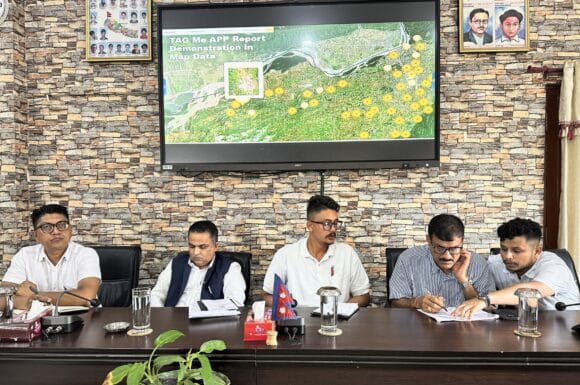
Creating a Living Legacy: Saral Marga
Perhaps the most touching tribute to their hard work happened in a local neighborhood they helped transform. Through road construction, beautification, and door to door awareness, the team turned a neglected area into a model of green living. The local government and residents were so moved by this transformation that they officially named the street Saral Marga (Saral Road). It stands as a permanent reminder that when young people lead, they don’t just clean a path, they pave a new way forward for everyone.
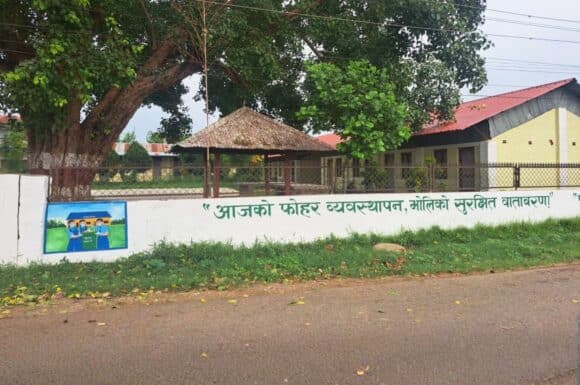
A Greener Horizon
Today, the impact of this partnership is visible in more than just the cleaner riverbanks or the signpost on Saral Marga. Because of the support from the GreenShift project, Saral Nepal has helped cultivate a culture of sustainability that will last for generations. They have shown that when local youth are empowered with the right resources and a seat at the table, they can transform a community’s challenges into its greatest treasures.
Blogs
How GreenShift Became a School-Wide Practice: Bal Vinod Secondary School
Sunita Sharma - Principal, Bal Vinod Secondary School | 2025-06-10On World Environment Day 2025, we visited Bal Vinod Secondary School, one of the schools that received a Climate Smart School (CSS) grant through the first year of the GreenShift Nepal project. The visit was an opportunity to see what had happened beyond the grant activities and whether the practices introduced through the project were continuing in the school.
Sunita Sharma, Principal of Bal Vinod Secondary School and the focal person for the grant, shared how the work has continued through students, teachers and everyday school practices. From waste segregation and reducing single-use plastics to maintaining a school garden and involving students in plantation, she described changes that have become part of the school's routine.
Here is her testimony, in her own words:
“Under the GreenShift project, first us focal teachers received a training. After that, we came back to our schools and formed eco clubs with students who were interested. We taught those eco club students this curriculum focused on climate change and the circular economy.
It has been really beneficial for the students. They even started banning single-use plastic products on their own.
When it comes to waste, they began segregating biodegradable, non-biodegradable, and hazardous waste. As you can see, we now have different coloured bins in place to separate them properly.
We also created a garden in the school. It’s doing well, and that too is thanks to the GreenShift project.
The school environment is better now. Students are actively taking part in plantation and taking care of them. They’ve started understanding how to protect the climate.
Plastic use has gone down a lot. It’s not completely zero yet, but we’re hopeful we’re getting there.
Happy World Environment Day!”
The visit showed that the impact of a grant does not necessarily end when the funded activities are completed. At Bal Vinod, the training, eco club and climate-focused learning have continued to shape how students engage with waste, plastics, gardening and the environment.
For GreenShift, this is an important part of what a Climate Smart School can look like: not simply a school that completes a set of activities, but one where students and teachers continue carrying those practices forward.

Field Stories
Turning Waste into Opportunity: The GreenShift Journey of Rupak Ghimire
Restless Development | 2025-05-28In the growing city of Bharatpur, located near the rich forests of Chitwan National Park, 23-year-old Rupak Ghimire saw something others often missed. Where many saw piles of plastic and unmanaged waste, Rupak saw an opportunity to act. With a Bachelor's degree in Social Work and more than seven years of experience in grassroots activism, his dream was always simple: stay in Nepal, do something meaningful, help his community breathe again.
Bharatpur has long struggled with waste management. Plastic and household garbage were regularly dumped along the Narayani River and in forested areas, threatening wildlife and the health of local residents. At the same time, climate change brought rising temperatures, erratic rainfall, and floods that made the city even more vulnerable. Rupak had seen enough. He wanted to be part of the solution.
During his grassroots activism, Rupak came across Saral Nepal, a youth-led civil society organization working on community development. He became active in the youth group, eventually becoming a core member and project lead. In 2024, Rupak got involved with the EU-funded GreenShift project when Saral Nepal learned about the GreenShift Youth Advocacy Grant. The team saw it as an opportunity to expand their environmental work. Rupak stepped forward to lead the application process, as the theme of climate action and waste reduction resonated deeply with him. For years, he had dreamed of a cleaner, greener Bharatpur. This was a chance to turn that dream into a plan.
Under Rupak’s leadership, Saral Nepal developed a proposal focused on community waste management, plastic reduction, and empowering youth and women. Their application was one of the three selected for GreenShift Year 2. For Rupak, it was a breakthrough moment. "This wasn’t just a project. It was a chance to take action on the issues I care about most," he reflects.
Saral Nepal launched a variety of community-based activities under Rupak's guidance, like Narayani River cleaning and advocacy programs. One of the most impactful was a four-day training on handicrafts for women in Ward 14 of Bharatpur. Participants learned to upcycle household plastic waste into beautiful traditional items like Dhakiya and Chakati. The initiative helped women gain income-generating skills while promoting the idea that waste can be a valuable resource.
Rupak also became an active user and advocate of TagMe, a mobile-based platform introduced through GreenShift to help identify and monitor waste hotspots. The team started not only using TagMe regularly to plan clean-up campaigns and track areas needing attention, but also trained and mobilized volunteers to use the app to map and report waste hotspots. The Saral Nepal team also conducted several orientation and awareness programs for TagMe. "TagMe made our work more focused. We no longer work blindly. Now we know exactly where to act," he explains.
At home, Rupak practices what he preaches. He carefully segregates his household waste and avoids single-use plastics. He has even encouraged local restaurants to stop using plastic straws. Through GreenShift, he also learned more about the circular economy and how to turn waste into products with social and economic value.
Rupak's experience with GreenShift opened new doors. He built stronger connections with Bharatpur Municipality, visited landfill sites to better understand the system, and gained insights into sustainable waste management. Inspired by these learnings, he now plans to explore green enterprise opportunities. Specifically, he is eager to launch a business that transforms plastic waste, banana fiber, and corn husk into marketable products, all while creating job opportunities for women and marginalized young people.
"My dream has always been to stay in Nepal and do something useful. GreenShift helped me see how that dream could come true," says Rupak. "We can turn waste into beauty and problems into purpose. That is real change."

Blogs
Why Nepal Needs to Make the Three-Color Bin System Mandatory ?
Monika Gurung, Waste Smart Fellow- Bharatpur Metropolitan City | 2025-05-08Could this be the breakthrough our country must have?
Let’s talk about the Three-Color Coded Bin System: the red, green, and blue bins we’ve
seen popping up in awareness programs, distributed by organizations, departments, projects,
schools, and youth groups. Most of them come with posters detailing what type of waste belongs
in each bin. But let’s be honest, how often do we actually see those bins being used correctly?
We’ve all seen it. Two bins standing side by side, both filled with the same mixed waste. The
labels? Ignored. The effort? Wasted. It’s both funny and tragic. Despite years of campaigns and
awareness efforts, we’re still struggling with the basics: segregation at source.
As environmentalists, or simply people who care about the environment, we develop this
unshakable habit of noticing waste anywhere we go; whether there are bins, how they’re used,
where the waste is going. It’s hardwired into us. Just like musicians instinctively listen to
background music, or photographers constantly observe light and angles, we spot garbage. We see
pollution. We feel the urgency.
And now as a Waste Smart Fellow of Bharatpur Metropolitan City, with my brief
research, Needs and Gap Assessment on Waste Management and consultation with Ward Chairpersons,
I feel the urgency and importance of the three-bin system more than ever. I’ve seen firsthand
how much our current system lacks, how much stress falls on limited infrastructure and waste
workers, and how a simple habit at the household level could transform the entire chain of waste
management.
.png)
But this isn’t just about observation. It’s about action. Because waste mismanagement is
not just ugly; it’s deadly. The pollution we create today is contaminating the air we
breathe, the water we drink, and the food we grow. It’s a slow poison. And if left unchecked, it
could lead our front door into another health crisis or lockdown: one caused by our own
carelessness.

So, what’s the solution?
The Three-Color Bin System is not just a tool; it’s the key to fixing the system.
Imagine what would happen if we actually implemented three bin system properly. Just like
Mayor Balen Shah once faced criticism for removing street vendors, many complained in the
beginning. But when the traffic settled and people saw cleaner streets and better order, minds
changed. People adapted. They understood.
We need the same bold leadership and structured policy when it comes to waste segregation. Some
might scoff and say, “We can’t even afford one bin; who’s going to use
three?” But it’s not about affordability; it’s about accountability and mindset. I believe,
currently 10% of people segregate waste voluntarily. It is possible to grow that number, from a
hundred to a thousand, to hundreds of thousands once the system is enforced.
Let’s address the elephant in the room: composting centers, recycling facilities, and material
recovery centers exist but they’re underutilized. Why? Because they don’t receive the
waste in the form they need. They’re not getting properly segregated materials. And it’s
impossible for 200 waste workers, 200 informal workers, and a handful of facility staff to sort
through the waste of 400,000+ people.

If every household practiced basic segregation with the three bins, everything else would become
easier. Existing Sorting, Compacting, Recycling and Composting Machines wouldn’t sit idle.
Waste Workers wouldn’t have to risk their lives at hazardous dumping sites. Streets would smell
cleaner. Leachate wouldn’t poison our rivers. Even the fish would breathe easier. And, only then will people understand the flow chain of circular
economy.
Everything begins at the source. Segregation is not just the first step of circular economy; it is the
root of the tree. If we don’t heal the root, we can’t expect the tree to grow.
And this message isn’t just for Bharatpur Metropolitan City. Cities across Nepalstill have time to
learn from the challenges of Kathmandu: mountains of uncontrollable waste in landfill sites, air
and water pollution, and irreversible environmental damage. Let’s not wait until it’s too late.

So once again, LOUD AND CLEAR: The Three-Color Bin System MUST be made
compulsory for Nepal’s Solid Waste Management. Waste segregation is
essential, but equally important is the use of dedicated collection vehicles for
each type of waste to ensure efficient waste management. Let’s start at the root.
Let’s fix the system. Let’s do this TOGETHER.

Blogs
From Advocacy to Action: My Feelings as a Waste Smart Fellow
Prem Prakash Budhathoki, Waste Smart Fellow, Kohalpur | 2025-04-04Hi, I’m Prem, and I’m sharing my feelings in words as a Waste Smart Fellow with the GreenShift Nepal Project. Because I believe words have the power to inform, advocate and educate. To be honest, I feel this isn’t just another role, it’s a meaningful opportunity to turn ideas into action, create impact, and work towards a sustainable future. Over the last two months, I’ve learned, unlearned, and grown in ways I never imagined. And guess what? I still have five more months to go, five months to make change happen, work on solid waste management, promote the circular economy, and drive meaningful action in the Kohalpur Municipality.

Picture 1: My colleagues (2nd cohort of WSF)
Picture 2: Taking action through the weekly sanitation program at Locality
First Impressions: A Bridge to Growth
From day one, I knew this project was different. It’s designed for young, passionate individuals looking to connect academic knowledge with real-world practice. Too often, such bridges collapse due to a lack of support, but I had a gut feeling this one would last.
Let's go back and find out who I am. With four years of climate advocacy experience and global exposure, I saw this as a game-changer. The best part? It’s local! Working in Kohalpur Municipality, my own local government, made the work personal. This wasn’t just about theory, it was about rolling up my sleeves and solving real challenges where it matters most.


Pictures 3 & 4: Learning and sharing knowledge, skills and experiences during WSF training
Second Impressions: I’m in the right place
The GreenShift Project is structured around nine components, each an opportunity to learn, contribute, and grow. Leaving my comfort zone four years ago was the best decision I ever made, and stepping into this fellowship reaffirmed my commitment to continuous learning. Challenges excite me, they mean I’m in the right place, growing in the right way.

Blogs
My Journey as a Focal Teacher for a Climate Smart School
Bishnu Bahadur Tharu | 2025-03-03Bishnu Bahadur Tharu, a Mathematics teacher at Adarsh Secondary School, Nepalgunj, was appointed as the focal teacher for GreenShift’s Climate Smart School initiative in 2024. In this role, he has led significant environmental changes in his school, inspiring students to embrace sustainable practices. Below is his testimony, shared during the GreenShift Year one - Annual Review and Experience Sharing program:
"As a focal teacher, my journey with GreenShift’s Climate Smart School has been both challenging and rewarding. After receiving Training of Trainers (TOT), I led several activities, including an awareness session on waste management and the circular economy for students in Grades 5 to 9. Conducting the session alone was difficult, and managing time effectively was a challenge, but the impact has been remarkable.
Following the program, students presented their learnings, and we saw a real shift. Our school premises are now waste-free, as noted by many teachers and parents. Students have become more aware and accountable for waste management, actively segregating waste into biodegradable, non-biodegradable, and hazardous categories. We also conducted a relay race game to reinforce recycling concepts in a fun and engaging way.
To minimize plastic waste, we procured a water filter, which has significantly reduced the use of PET bottles. Additionally, we organized a plantation drive and planted around 400 trees, contributing to a greener school environment.
Looking ahead, I recommend adjusting the teaching schedule to give focal teachers more time to lead climate initiatives effectively. Expanding awareness programs will further inspire behavioral change, ensuring students take full responsibility for waste management. The progress we have seen proves that when students are empowered, they become the true change-makers in building a sustainable future."

Blogs
The Surprising Power of Green Shift Ambassador
Kaiyum Rain, Green Shift Ambassador | 2025-01-10
 |
Madhesh, one of the provinces most affected by climate change, is currently facing numerous challenges such as drought, waste pollution, lack of drinking water and rising temperatures. These issues have led to an unbalanced ecosystem, impacting the lives of many.
Youth in Madhesh are facing significant problems due to unemployment, lack of awareness, and unstable government. Many are leaving the country in search of better opportunities. If you ask the current generation about traditional farming practices, most are unaware, except for those studying agriculture. Youth make up a significant percentage of the population in Madhesh.
As a climate campaigner and activist in Madhesh province, I feel a deep sense of responsibility towards my generation and the ones to come. While everyone dreams of a better future for their family, my dream for society, the nation and the world. I believe in being a responsible and accountable youth, dedicated to saving our earth and contributing my energy towards this cause.
Since 2017, I have been actively involved in various social and climate-related activities. I regularly update my social media to raise awareness and encourage youth to be socially responsible and accountable.
Through social media, I got to know about the Green Shift Ambassador initiative by Creasion Nepal. I applied and was selected and also attended an online orientation training. The challenge was to carry out activities with zero investment. Initially, I spent a week overthinking how to complete this project. However, after visiting the Creasion office and in Kathmandu and receiving guidance, I returned to Janakpurdham with renewed confidence.
I started coordinating with friends Shubham Zha, Aayush Chaudhary, and college teachers. We began our activities at Janakpur Community College and extended them to Sabaila, targeting both urban and rural areas. Sabaila, Bhathihan is my birthplace, and Janakpurdham is my hometown.
Duration of the project August to November we completed various activities such as cleanliness drives, plantation programs, Trash to Treasure competitions, Know Your Plastic sessions, and more.
Being a Green Shift Ambassador was challenging, but it taught me how one youth can contribute energy and knowledge with limited or no resources. I learned a lot about human behavior, contribution, and being a change-maker. Working with children, students, and the community was incredibly rewarding.
I realized that such projects are more needed in rural areas due to community demand. For me, this is not just a project; it’s a long-term commitment. I hope to connect with many organizations and continue working towards better climate and social action.

Blogs
फोहोरमैला व्यवस्थापनका लागि मिडियाको भूमिका
Anurag Anant | 2024-12-27मिडियाको आफनै एउटा विशेष सिद्धान्त छ । प्राथमिकता र बढी भन्दा बढी पाठकले पढन् चाहेका विषयवस्तु र समाचार पस्किनु पर्ने समयको आवश्यकता मात्रै होइन कि बाध्यता पनि हो । हुनतः वर्तमानमा पाठक पनि चटपटे समाचारहरु चाख मानेर पढने गरेका छन् । मुलधारको मिडिया होस कि सामाजिक सन्जालमा लेखिएका विषयवस्तु आज भोली भाइरल हुने जामानामा गहन बिषय वस्तु आवश्यकता भन्दा पनि कम उठने गरेको विभिन्न मिडिया कन्टेन्ट अध्ययेताहरुको निष्कर्ष रहेका छन् ।
मासले पढन चाहेको बिषयवस्तु उठाउनु मिडियाको लागि बाध्यात्मक आवश्यकता भए पनि हाम्रो वरिपरी रहेका गम्भीर प्रकृतिका बिषयवस्तु उठाउनु जरुरी छ । त्यस्ता बिषयवस्तुले तत्कालै परिणाम दिन नसकेता पनि भविष्यमा त्यसले पार्ने प्रभावको भार निकै गह्किलो हुने गर्दछ ।
मिडियाका लागि हार्ड न्यूज आवश्यक भएतापनि कृषि, वातावरण, पर्यावरण, जलवायु परिवर्तन, पर्यटन जस्ता विषयवस्तु समाज र देशका लागि दीर्घकालीन रुपमा महत्वपूर्ण बिषय भएको बुझाई मिडियाका मालिकले ध्यान दिन र मनन गर्नु जरुरी छ ।
विश्व बैंकले जारी गरेको एक अध्ययन अनुसार विश्वभरी बार्षिक करिब ४०० मिलियन मेट्रिक टन फोहोर उत्पादन हुने गरेको छ । सन् २०५० सम्म बढेर यसको अनुपात करिब दोब्बर हुने हुने प्रक्षेपण गरिएको छ । जस अनुसार बढी आम्दानी हुने देशहरुमा प्रति व्यक्तिले प्रतिदिन करिब २ देखि ४ केजीसम्म फोहोर उत्पादन गर्ने गरेका छन भने न्यून आय भएका देशहरुमा प्रति व्यक्तिले प्रतिदिन करिब ०.३ देखि ०.५ किलोग्राम फोहोर उत्पादन गर्ने गरेका छन ।
नेपालको सन्दर्भमा भएको एक अध्ययन अनुसार दैनिक करिब २ हजार मेट्रिक टन फोहोर उत्पादन हुनेगरेको छ । जसमध्ये सबैभन्दा बढी फोहोर काठमाडौं महानगरबाट उत्पादन हुने गरको बताइएको छ । यस अर्थमा काठमाडौंका लागि फोहोरमैला व्यवस्थापन एक गम्भीर समस्याको रुपमा रहेको यर्थात तपाई हाम्रो सामु प्रस्टैछ । तर, जब जब काठमाण्डौं महानगरबाट उठाइएका फोहोर फाल्ने ठाउँ डिसडोलका जनताले फोहोरमैला फाल्न रोक लगाउँछन तब तब हाम्रो मिडियामा उक्त बिषयवस्तुहरु बढी भन्दा बढी मात्रामा स्थान पाउने गरेका छन । जब, फेरि त्यस्ता बिषयवस्तुहरु अस्थायी रुपमा समाधान उन्मुख हुन्छ, त्यसपश्चात ती बिषयवस्तुहरु दीर्घकालिन समाधानका लागि कुनै पनि फलोअप समाचारहरु प्रायः न्यून मात्रामा मात्रै प्रकाशित भएको पाइन्छ । यसको अर्थ मिडियाको लागि यि र यस्ता विषयवस्तुहरु त्यति प्राथमिकताको बिषय नरहेको एक पाठकको दृष्टिकोणबाट हेर्दा अथ्र्याउन सकिन्छ । त्यसो त मिडियाले चाहेको खण्डमा १ लाई सकारात्मक तरिकाबाट प्रस्तुत गरी ११ बनाउन सक्छन् । तर, कस्ता बिषयलाई १ बाट ११ बनाउने सोचनीय र गम्भीर काम पनि हो ।
अब कुरा गरौं हाम्रो वरिपरी विभिन्न संघसंस्थाहरुले समाज परिवर्तनका लागि गरी रहेका प्रयासहरुको बारेमा । दिनानुदिन विभिन्न संघसंस्थाले हाम्रो परिपरी गर्दै आई रहेका राम्रो र उदाहरणीय कामहरु मिडियाको आँखा अगाडि नै भएतापनि यथोचित स्थान पाउन सकेको छैनन । तर, ति विषयवस्तुहरु तपाई हाम्रो जीवन, जगत र पर्यावरणका लागि निकै महत्वपूर्ण रहेको छ ।
क्रिएसन नेपाल विगत डेढ दशक देखि दिगो विकासका लक्ष्य प्राप्ति तथा प्लास्टिक फोहोरमैला संकलन, व्यवस्थापन क्षेत्रमा काम गर्दै आई रहेको छ । यसै, क्रममा हाल यूरोपियन यूनियन (ईयू)को सहयोगमा सञ्चालित ग्रीनसिफ्ट परियोजनाले मानव जीवन, जगत र पर्यावरणका लागि आवश्यक वातावरण तथा पर्यावरण संरक्षण गर्दै कार्वन उत्सर्जनलाई शून्यमा झार्ने लक्ष्य सहित सञ्चालित प्लास्टिकजन्य फोहोरमैला व्यवस्थापन तथा चक्रीय अर्थतन्त्र सम्बन्धी परियोजना ग्रीनसिफ्ट नेपाल सुरु भएको एक बर्षको अवधिमा नै विस्तारै सकारात्मक परिवर्तनको संकेत दिन थालेको क्रिएसनका संस्थापक अध्यक्ष आनन्द मिश्रको भनाई छ । परियोजना अन्तर्गत सञ्चालित गतिविधिले विद्यालयका विद्यार्थीहरुमा व्यवहारिक परिवर्तन, युवा पैरवी समुहद्धारा स्थानीय स्तरमा सञ्चालन गरेका अभियानहरु, स्थानीय तहको फोहोरमैला नीति निर्माणका लागि फेलोले गरेका प्रयासहरु, शिक्षण अभ्यासका लागि विकास गरिएको जलवायु परिवर्तन तथा चक्रीय अर्थतन्त्र नामक अभ्यास पुस्तिकाले “सिफ्ट” को संकेत देखाएको छ । परियोजना अन्तर्गत ४ बर्षमा ९ स्थानीय तहका ३६ सामुदायिक विद्यालयमा अभ्यास गरिने यस पुस्तिकले मुलुकभरीको करिब ३३ हजार विद्यालयमा एक साथ फ्रि फ्राइडे बुकको रुपमा लागु गर्न सके फोहोरमैला व्यवस्थापन र चक्रीय अर्थतन्त्रको क्षेत्रमा नयाँ क्रान्ती ल्याउन सकिने परिकल्पना गर्न सकिन्छ ।
यसका लागि स्थानीय देखि राष्ट्रिय स्तरका मिडियाले नियमित रुपमा यस्ता सकारात्मक बिषयलाई पत्रपत्रिकामा प्राथमिकताका साथ स्थान दिन सक्नु पर्छ । यस्ता गतिविधिहरुद्धारा निर्मित सकारात्मक परिवर्तनका बिषय मुलुकको पूर्वदेखि पश्चिम र उत्तरदेखि दक्षिण सीमासम्म बराबर रुपमा फैलाउन सकिए जलवायु परिवर्तन, पर्यावरण तथा वातावरण संरक्षणका लागि कोशेढुगां सावित हुने थियो । यसो हेर्दा ग्रीनसिफ्ट अभियान केवल अभियान मात्रै होइन, यो अभियान आम रुपमा प्रत्येक नागरिकले अनुसरण गर्नु पर्ने अभियानको रुपमा रहेको हुनाले यसलाई जोकोहीले पनि अनुसरण गरी अगाडि बढाउँदा कुनै रोकटोक छैन । यस अभियान मार्फत देशव्यापी रुपमा १२ स्कुल बाट ३३ हजार मुलुकभरीको सामुदायिक विद्यालय, ३ युवा समुहबाट ७५३ स्थानीय तहमा युवा पैरवी समुहद्धारा समुदायमा आधारित अभियान र प्रत्येक स्थानीय तहले तथ्यांकमा आधारित फोहोरमैला नीति निर्माणका लागि आवश्यक प्राविधिकको रुपमा खटिएका फेलोले निश्चिय नै तात्विक रुपमा व्यापक परिवर्तनका रेखा कोर्न सफल हुन सक्नेमा दुईमत छैन । यसमा मिडियाले समाज र दिगो देश निर्माणका लागि महत्वपूर्ण भूमिका निर्वाह गर्न जरुरी छ ।
ग्रीनसिफ्ट अभियानका क्रममा देखिएका कतिपय सफलताका कथा र पात्रहरुले निर्वाह गरेका सकारात्मक भूमिका निकै सराहनीय छ । त्यस्ता पात्रका सफलतालाई बाहिर ल्याउन सकिए, त्यसबाट अनेकौं नयाँ पात्रहरु प्रेरणा लिएर अभियानमा हातेमालो गर्न अगाडि सर्थे होलान् । यसका लागि पनि मिडिया हाउसले चटपटे समाचारहरु प्राथमिकतामा राखेता पनि समाज परिवर्तनका उदाहरणीय मानवजीवनलाई भविष्यमा हुन सक्ने संकटबाट जोगाउन वातावरण तथा पर्यावरणका क्षेत्रमा अटुट योगदान गरीरहेका पात्र, अभियान र क्रियाकलापका समाचारहरु निःसन्देह स्थान पाउनु पर्दछ ।
ग्रीनसिफ्ट परियोजना सञ्चालनको पहिलो बर्षमै स्थापित गरेका सफलताका सकारात्मक मानक (माइलस्टोन) लाई सचेतना र अबलम्बनका लागि दायरा बढाउन मिडियाको भूमिका टड्कारो रुपमा अपरिहार्य छ । त्यसो त, ग्रीनसिफ्ट केवल एक परियोजना मात्रै होइन, एक वृहत अभियान पनि हो । तसर्थ, देशैभरीका विद्यार्थी, युवा, नागरिक अभियन्ता, बौद्धिक वर्ग, पेशाकर्मी र सञ्चारजगत मिलेर प्लास्टिकजन्य फोहोरमैला व्यवस्थापन र चक्रीय अर्थतन्त्रलाई बढावा दिनका लागि साझा दृष्टिकोण निर्माण गर्दै, सामुहिक नेतृत्व मार्फत अगाडि बढाउन ढिलो गर्नु हुँदैन । फोहोरमैला व्यवस्थापनको लागि चक्रीय अर्थतन्त्र मार्फत ग्रीनसिफ्टका पहलहरु जलवायु परिवर्तन, पर्यावरण तथा वातावरण संरक्षणका लागि नेपालको लागि निकै सान्दर्भिक छ । यसले आय आर्जनसँगै सामुदायमा सचेतनासँगै विद्यालयका विद्यार्थी मार्फत व्यवहारिक परिवर्तन ल्याउन सकिन्छ ।

Blogs
Shifts of the Year: GreenShifts for a Sustainable Future
GreenShift Team | 2024-12-08Yeart 1 has demonstrated the strength of collaboration and shared leadership. Across schools, youth groups, waste enterprises, municipalities, and policy levels, diverse stakeholders have come together to drive meaningful change. The integration of sustainability practices, youth leadership, policy advocacy, and municipal-level action has created a ripple effect that promises to influence national strategies and shape a more sustainable future.
GreenShifts in Schools: Building a Foundation for Sustainability
In the past year, schools have become epicenters for sustainable change and driving force for GreenShift campaign, embedding environmental stewardship into their core activities. Key initiatives have included the introduction of waste segregation bins, the implementation of water systems to eliminate plastic bottle use, and the transition from waste burning to formal municipal waste collection. These efforts have been complemented by the switch from plastic lunchboxes to sustainable alternatives, the expansion of green spaces, and a comprehensive ban on single-use plastics.
A standout achievement has been the continued funding and support for these initiatives by one school, ensuring their long-term sustainability. Collaboration with local municipalities has been pivotal, with the school selected to spearhead these transformative efforts. Formal waste collection services have been secured, and extensive dialogue with the management board, teachers, and students has led to the development of a curriculum designed to foster student leadership in waste management. This has resulted in the creation of waste management guidelines, supported by both financial and technical resources, with the potential to influence national policy on sustainability and waste management.
GreenShifts in Youth: Empowering the Next Generation
Youth-led initiatives have ignited a new wave of community-driven sustainability efforts. In Bardibas, a weekly cleanup campaign has been launched, alongside a transformative project to turn Dhapali Tole in Nepalgunj into a model clean and hygienic neighborhood. The first-ever dialogue on waste management in the Gagangunj community also took place, setting the stage for broader community engagement.
A landmark 12-point pledge to protect the environment and natural resources was signed in Nepalgunj, involving key stakeholders such as local government, schools, the private sector, and traffic police. Youth groups were empowered to lead community-level awareness campaigns, supported with both financial and technical resources. These activities have contributed to the formulation of local policies with the potential to shape national strategies on waste management and environmental protection.
GreenShifts in Waste Enterprises: Advancing a Circular Economy
The waste management sector has seen a remarkable transformation, with a focus on internalizing health and safety practices for waste workers and incorporating GESI-friendly workspace requirements into enterprise designs. Efforts to improve financial and environmental compliance, as well as the formalization of waste management businesses, have created a more robust and sustainable waste management ecosystem.
A key milestone was the organization of a business plan competition, which involved 26 waste enterprises. After rigorous evaluations, 6 finalists emerged, receiving tailored support to develop plans that focus on financial sustainability, environmental compliance, and adherence to GESI guidelines. These enterprises were also equipped to build strategic partnerships, ensuring long-term success and scalability within the waste management sector.
GreenShifts at Municipalities: Driving Local Change Through the Waste Smart Fellowship
At the municipal level, the establishment of the Solid Waste Management Committee in Bardibas, under the leadership of the Mayor, marked a major step forward in improving local waste management practices. Working closely with local authorities, waste management directives were formulated and endorsed, setting clear guidelines for municipalities to follow.
A comprehensive waste mapbook was developed for all first year 3 project municipalities, highlighting critical waste infrastructure, waste collection route, and pinpointing waste hotspots. Additionally, a waste data collection and characterization methodology were piloted in Lalitpur, laying the groundwork for future studies.
The Waste Smart Fellowship has been central to these efforts, providing fellows with in-depth training in key areas such as GIS mapping, waste management strategies, and circular economy principles. Collaborating with municipalities, these fellows have played a critical role in executing waste management initiatives and ensuring alignment with GESI approaches.
GreenShifts at Policy Level: Shaping National Policy for Sustainability
A significant focus this year has been on policy development at the local level. Local Level Solid Waste Management (SWM) policies have been developed across all project areas of year one in close collaboration with municipal governments.
This collaborative effort has been supported by a series of inception workshops held in Bardibas, Nepalgunj, and Lalitpur, which marked the beginning of a comprehensive policy development process. The project has also conducted extensive research, including waste data collection and focus group discussions, to assess existing policy gaps and inform future policy decisions. Both financial and technical support have been provided to ensure the successful development of these policies, which have the potential to influence national waste management and sustainability strategies.
These GreenShifts represent a collective commitment to waste management, environmental protection, and the transition to a circular economy. As we move forward, the continued collaboration of all these actors will be essential in amplifying these efforts and securing lasting, impactful change for communities, ecosystems, and economies across the nation. Miles to go before we reach……

Blogs
How GreenShift Transformed Our School
Subash Karki | 2024-12-01Subash Karki, a Mathematics teacher at Prabhat Secondary School, Lalitpur, was appointed as the focal teacher for GreenShift's Climate Smart School initiative in 2024. In this role, he has spearheaded environmental transformation in his school, motivating students to adopt sustainable practices. Below is his testimony, shared during the Annual Review and Experience Sharing program:
"Before the GreenShift project, our school lacked any system for plastic waste management or segregation. The issue of unmanaged waste was serious, but it was difficult to bring it to the attention of senior management because environmental concerns weren’t seen as a priority in our academically focused school. Students often brought junk food and carelessly discarded wrappers, which even led to clogged toilets when wrappers were improperly disposed of.
The GreenShift project brought a much-needed transformation. With its support, we established an Eco Club that became the driving force for change. Through the club, we raised awareness across the school about the harmful effects of plastic waste. We successfully introduced a ban on junk food and implemented a penalty system to discourage students from bringing it to school. Additionally, we promoted the use of cotton fibre bags as an eco-friendly alternative to reduce waste generation.
The project also provided a circular economy curriculum workbook filled with practical, interactive activities, which helped students understand waste audits and segregation in a fun and engaging way. The results have been remarkable. The difference between our school before and after GreenShift is like night and day. Today, our school is greener, cleaner, and more sustainable than ever before. Thank you, GreenShift, for empowering us to make this incredible transformation."

Field Stories
Empowering Waste Management through Youth Leadership: Om Shanti Thapa's Journey as a Waste Smart Fellow in Nepalgunj
Om Shanti Thapa | 2024-09-10The Green Shift: Circularity of Plastic Waste for Net-Zero Carbon Nepal (GreenShift Nepal) project, funded by the European Union, is spearheading a transition to a circular economy across nine municipalities in Nepal. Implemented by CREASION in partnership with Restless Development and Youth Innovation Lab (YI-Lab), this four-year initiative spans three provinces—Bagmati, Madhesh, and Lumbini—aiming to revolutionize waste management practices.
At the heart of this transformative effort is the **Waste Smart Fellowship**, a platform designed to empower young people interested in solid waste management, circular economy, environmental sustainability, and climate action. One of these passionate fellows is **Om Shanti Thapa**, currently placed in Nepalgunj Sub-Metropolitan City, where she is helping to drive innovation and policy change in waste management under the GreenShift Nepal Project.
In her role, Om Shanti works closely with municipal officials, including the environment, sanitation, and solid waste management departments, as well as elected representatives. Her primary focus is on devising innovative solutions for plastic waste collection, mobilizing civil society, and promoting sustainable product design and packaging.
Assessing Nepalgunj's Waste Management Landscape
Om Shanti’s journey began with a comprehensive assessment of Nepalgunj’s waste management landscape. She conducted field visits to landfill sites, held interviews with key stakeholders, and analyzed existing policies and guidelines. Through this initial phase, she identified critical gaps in the city’s capacity for waste management, including shortcomings in data collection and monitoring, and the enforcement of the *Solid Waste Management Act 2075*.
Her efforts culminated in the completion of several key reports, including a **Policy Gap Assessment Report** and a **Data Collection Report**, which laid the groundwork for future strategic actions. Om Shanti also played a pivotal role in organizing a **Stakeholder Dialogue Meeting**, where the Mayor, Deputy Mayor, Ward Chiefs, and various waste management stakeholders came together to discuss the challenges and opportunities facing Nepalgunj’s waste management system.
Key Insights and Recommendations
During the Stakeholder Dialogue Meeting, Om Shanti highlighted some of the most pressing issues. While the *Solid Waste Management Act 2075* provides a strong foundation, its implementation remains inconsistent, particularly in a rapidly growing city like Nepalgunj. Alongside policy gaps, she pointed out the lack of a robust data collection system, which is essential for tracking progress and making informed decisions.
Her reports outlined several recommendations, including the need to align local policies with national laws, enhance budget allocation, improve healthcare waste management, and introduce procedural guidelines to streamline waste collection tariffs. Om Shanti also emphasized the importance of data-driven decision-making, preparing a data collection template that would allow Nepalgunj to track waste management efforts more effectively.
Moving Forward: A Vision for Circularity
Om Shanti’s work is not just about identifying problems; it’s about envisioning solutions. With her support, Nepalgunj is poised to enhance its waste management system through more effective policies, improved data infrastructure, and a commitment to eco-friendly practices. The municipality is also prioritizing the elimination of illegal dumping and the burning of waste—two significant environmental issues that compromise air quality and public health.
The Future of Waste Smart Fellows
For Om Shanti, the Waste Smart Fellowship is more than a professional role—it’s a personal mission. She views this experience as a launching pad for her career in environmental sustainability, driven by her passion for creating a greener, cleaner future. By working directly on the frontlines of waste management, she is gaining invaluable skills and knowledge that will empower her to make a lasting impact in Nepalgunj and beyond.
“I see the Waste Smart Fellowship as an incredible opportunity to grow both personally and professionally,” she shares. “Working in a field that aligns with my passion for sustainability and the circular economy motivates me to push further. My goal is to transform Nepalgunj into one of the most beautiful and clean cities in Nepal, and I believe this project will help us achieve that.”
Through the Waste Smart Fellowship, Om Shanti is contributing to the larger mission of GreenShift Nepal—advancing a circular economy and fostering sustainable waste management practices across the country. Her work in Nepalgunj is not only addressing immediate waste management challenges but also laying the foundation for a more resilient and eco-friendly future.

Blogs
बूबःत छथाय् मुनाः समुद्र दयेकी
Maulik Bajracharya | 2024-09-05ज्वजलपा!
जिगु नां मौलिक बज्राचार्य खः । जि थौंकन्हय् यल महानगरय् च्वनाच्वनागु दु । जिं थःत छम्ह सामाजिक कार्यकर्ता व जिम्मेवार युवाया रुपय् म्हसीका बिया ।जि छम्ह ल्याय्म्ह जूगुलिं आःया समाज व देय्या मेरुदण्डया रुपय् थःत म्हसीके थ्व छिगु हे खः ।थःगु कर्तव्य व जिम्मेवारी पूवंकेत जि न्हू पला युवा खल ले आबद्ध जुवा च्वोनागु दु |जिं न्हू पला युवा खल य सचिवकथं स्वानाच्वना दू ।
न्हू पाला युवा खलः म्हसीका, मू आदर्श कथं "समाजया नितिं युवा" ख | थ्व हे मू आदर्श खः ले च्वोना वि .स २०७७/०९/१६ गते गैर सरकारी संस्था या रुपं पलिस्था जुल | थ्व संस्थाया परिभाषा “ New Step Towards New Beginning “ ख | संगठनय् ११ म्ह ज्यासना पुच :या दुज : नापं ५० प्लस स्वंय अप्व : दुज : व स्वयंसेवकत् दुगुजुल |यो संस्था आशिष बज्राचार्य को अध्यक्षतामा संचालन हुदै आइरहेको छ ।झीगु संस्थाया मू आज्जु धइगु समाजय् उल्लेखनीय हिउपाः हयेगु, युवातय्त प्रेरणा बीगु, विपद् व्यवस्थापनया नापनापं शिक्षा ख्यलय् नं योगदान बीगु खः ।थ्व हे उद्देश्ययात साक्षीया रुपय् बिचाः यानाः जिमिसं थीथी ज्याझ्वः क्वचायेकागु दु । थ्व आः थी थी ज्याझ्वः अन्तर्गतया मू ज्याझ्वः” GREENSHIFT PROJECT” ख |
युरोपेली संघया मू आर्थिक ग्वाहालि,क्रिएसन नेपाल , रेस्त्लेस देभेलोप्मेंट र युथ इनोवेशन ल्याब को सहकार्यय् संचालन जुयाच्वंगु थुगु ज्याझ्वलय् जिपिं नं सहयात्री जुयाच्वनागुलिं तसकं लय्ताया ।आःया समाजय् प्लाष्टिकया छ्यलाबुला म्हो यायेगु व थुकिं जुइगु हानि बारे जनचेतना न्यंकेगु, समाधान मालेगु व समाजयात प्लाष्टिक मुक्त यायेगु थुगु परियोजनाया मू आज्जु खः ।
थुगु परियोजना अन्तर्गत जिमिसं थीथी ज्याझ्वः न्ह्याका वयाच्वनागु दु ।थ्व ज्याझ्वः अन्तर्गत जनचेतनाया नितिं कला धेंधेंबल्लाः, लिपि धेंधेंबल्लाः व जनचेतना भिडियो निर्माण क्वचायेकाः वइगु दिनय् अझ नं फाइदाजनक ज्याझ्वः न्ह्याकेगु निर्णय यानागु दु ।
थुपिं ज्याझ्वःत न्ह्यानाच्वंगु इलय् प्रभावकारी उद्देश्य दुगु थुगु ज्याझ्वलय् छम्ह सहयात्री जुयाच्वनागुलिं जि तसकं लय्ताया व भाग्यमानी तायेका ।जिं थुगु परियोजना दुने यक्वं स्थायी ज्ञान कायेत ताःलाकागु दु ।थुगु परियोजना अन्तर्गत जिं प्लाष्टिकया छ्यलाबुला म्हो यायेगु, लैंगिक समानता कायम यानाः ज्याझ्वः संकलन यायेगु, प्लाष्टिकया छ्यलाबुला म्हो यायेगु, थःगु बिचाःयात संचार माध्यमय् गथे यानाः थ्यंकेगु धइगु सयेकागु दु ।थुकथं जिं प्राप्त यानागु ज्ञान जिगु नितिं व्यक्तिगत रुपं व संस्थागत रुपं तसकं हे फाइदाजनक जूगु अनुभव यानागु दु ।जिमिसं सयेकागु खँयात न्ह्याकाच्वनागु ज्याझ्वलय् लागू यानाच्वनागु दु, उकिं जिं नं सुगन्धयात लुँइ घर्षण यायेगु ज्या यानागु महसुस यानागु दु ।
थ्व परियोजनापाखें जिं महसुस यानागु दु कि झीगु समाजयात हिलेगु व छुं सकारात्मक ज्या यायेगु मू भूमिका थ्व देय्या युवातय्गु खः ।झी ल्याय्म्हतय्सं याये मास्ति वःसा समाज व देय्यात परिवर्तनया लँपुइ यंके फइ पक्का नं खः ।वर्तमान समाजया न्ह्यलुवा जुयाः हरेक ल्याय्म्हतय्के देशय् योगदान बीमाः, समाज हिलेमाः, थःगु मातृभूमिया रक्षा यायेमाः, सफा यायेमाः, भविष्यया नितिं स्वच्छ जुइमाः धइगु आदर्श दयेमाः धइगु जिगु धारणा दु ।थ्व आदर्शया साक्षी जुयाः थःगु योगदान बियाच्वंपिं झीगु समाजय् नं ज्वलन्त दसुत दु ।अथे हे झीसं नं थःगु फुगु योगदान बीमाः ।
झीसं चिचीधंगु ज्याखँ न्ह्याकाः तःधंगु हिउपाः हयेत सक्षम जुइ, गथेकि "बूबःत छथाय् मुनाः समुद्र दयेकी" ।थुकिया नितिं समाजप्रतिया महत्व व दायित्वया साक्षी जुयाः सकल ल्याय्म्हत छथाय् मुनेमाल जिगु विचाः खः ।
लिपांगु इलय् जि क्रिएसन नेपाल , रेस्त्लेस देभेलोप्मेंट र युथ इनोवेशन ल्याब यात ठुजागु उद्देश्यपूर्ण व परिवर्तनशील बिचाः दुगु परियोजनाय् झीत दुथ्याकाः हिउपाः हयेगु मौका बियादीगुलिं एकदम ल्येता व इगु दिनय् झीत आपालं ह्वःताः चूलाकाः योगदान यायेत प्रोत्साहित जुइगु भलसा कयाच्वना । इगु दिनय् झीत आपालं ह्वःताः चूलाकाः योगदान यायेत प्रोत्साहित जुइगु भलसा कयाच्वना ।
सुभाय्!

Blogs
My Journey with GreenShift Nepal - Surendra Sah
Surendra Shah | 2024-09-05Hello, my name is Surendra Sah. I am from Ward No. 14 of Bardibas Municipality and currently serve as the president of Bardibas Youth Network. Working on sanitation and waste management in collaboration with GreenShift Nepal has provided me with many positive experiences. I have learned and understood a lot through this collaboration. The journey has been enjoyable and memorable. Compared to before, Bardibas Municipality is now becoming much cleaner and more organized.

After we began our work, we developed and passed a sanitation and waste management guideline, which will help in managing waste and keeping the area clean more effectively in the future. Through this partnership, we got the opportunity to carry out many significant activities. We organized tree-planting programs, conducted weekly cleaning campaigns, performed awareness-raising street dramas, and shared information about TagMe. This campaign has made a significant impact on the community and will continue to inspire efforts to keep the area clean.

Blogs
My Role in a Greener Tomorrow - Aasha Sah
Aasha Sah | 2024-08-30Earlier, I was concerned about the waste management situation in Bardibas. It was during this time that I got the opportunity to join the GreenShift project, which primarily focuses on plastic waste management. I hoped that this project could bring some positive changes to my community and myself, and now I truly feel that change, which makes me extremely happy.
With the support of this project and our dedication, we have managed to improve waste management to some extent. We helped set up a recycling center, organized dustbins on the streets, and succeeded in bringing about positive changes in people's behavior. Along the way, we faced various challenges—some people ignored us, and some even mocked our efforts. But as they say, "Hard work never goes in vain," we overcame every challenge and ultimately achieved our goals, and now I see that everyone is appreciating our work.

Field Stories
Rasti’s Journey to Becoming a Climate Action Leader
Rasti Buda Magar | 2024-08-03Rasti Buda Magar grew up in Nepalgunj, a bustling town where the environment often took a backseat to rapid urbanization. As a child, she saw people casually toss wrappers and trash on the streets, including herself. Climate change and environmental protection were concepts she learned about in school, but they seemed distant and irrelevant to her everyday life. Like many of her peers, she didn’t see how her individual actions could make a difference. However, since her childhood, she was driven by her desire to make a meaningful impact in the community.
In 2019, Rasti joined a local organization in Nepalgunj called “Nice Nepalgunj” that addressed waste management and environmental issues in the community. Rasti joined the organization as a volunteer and later became its Treasurer. The group focused on making Nepalgunj cleaner and greener, organized community orientation and municipal-level workshops. Rasti got associated with the GreenShift project in 2023, when Nice Nepalgunj was selected as one of the Youth Advocacy Groups under GreenShift.
"GreenShift has been a game-changer for our environmental work. The innovative approaches they’ve introduced, like the TagMe app, have given us the tools we need to make a real impact. Mapping waste and using that data to advocate with the local government has been incredibly effective. It’s inspiring to see how technology can be used to drive positive change."

As part of the GreenShift project, Rasti seized the opportunity to participate in policy reform discussions and work directly with government officials. This experience gave her the confidence to raise her voice on issues she once thought were beyond her reach. Rasti began advocating for stronger environmental policies and urging the government to listen to the concerns of young climate activists like herself.
"I used to think our environmental issues were someone else’s responsibility, but GreenShift and my work with Nice Nepalgunj have changed my perspective. If we don’t act, who will? It’s our future at stake, and young people like us are in the best position to address climate change."
Today, Rasti is more than just a Treasurer at Nice Nepalgunj—she is a climate action leader in her community. Her journey from a young girl who once littered without a second thought to a climate advocate has inspired many others in Nepalgunj to take action. Thanks to Rasti and her team, waste management and environmental sustainability have become part of the local conversation, with growing support for initiatives that promote a cleaner, greener future.

Blogs
Navigating his place and Sparking Changes
Samyog Dhakal | 2024-07-23Samyog Dhakal's journey exemplifies the transformative power of youth in driving positive change. At just 25 years old, this environmental science graduate from Damak, Jhapa, embraced an opportunity that would take him far from his comfort zone.
Despite having moved to Kathmandu for his studies, Samyog didn't hesitate when offered a position as a Waste Smart Fellow in Bardibas—a city entirely new to him. His willingness to relocate showed his adaptability and commitment to making a difference.
Samyog's passion for environmental issues, particularly waste management, had been cultivated during his bachelor's studies. Now, armed with knowledge and driven by a desire to contribute meaningfully to society, he saw this role as the perfect opportunity to translate his academic insights into real-world impact.
This young man's story serves as an inspiring example of how the younger generation can spark action and lead the charge in addressing critical environmental challenges. By stepping out of his familiar surroundings and into a new community, Samyog positioned himself at the forefront of local sustainability efforts, ready to apply his expertise where it was needed most.
Establishing his place
Samyog's journey as a Waste Smart Fellow in Bardibas began with a realization that, the city faces significant waste management challenges. Despite visible issues, initiatives for waste management were notably absent. This gap motivated him to choose Bardibas Municipality for a seven-month fellowship, aiming to create a visible impact and drive positive change. His background includes work with private entities and public companies, but this was his first grassroots experience with local government.
While Samyog's professional background included experience with both private entities and public companies, this fellowship marked his first foray into grassroots work with local government. It was a new frontier that promised both challenges and opportunities for growth.
The initial weeks in Bardibas proved challenging for Samyog. He found himself navigating unfamiliar territory, both literally and figuratively. From finding his bearings in a new city to establishing connections with key individuals, each day presented its own set of hurdles. However, amidst these challenges, Samyog found an invaluable ally in Mr. Dharamnada Joshi, the Chief Administrative Officer (CAO). Mr. Joshi's unwavering support became a cornerstone of Samyog's early experiences, helping him overcome obstacles and find his footing.
In a bold move that speaks volumes about his faith in Samyog, Mr. Joshi thrust the young fellow into the spotlight merely three days into his tenure. Samyog was tasked with delivering a 15-minute presentation at a local event, where he introduced GreenShift Nepal, discussed plastic waste management issues and potential solutions, and expounded on the concept of circular economy. This early exposure proved instrumental, allowing Samyog to quickly establish his presence and credibility among community members and ward representatives.
This not only showcased Samyog's adaptability and knowledge but also set the tone for his impactful work in the months to come. It marked the beginning of a journey that would see him transform from an outsider to a pivotal figure in Bardibas's waste management landscape.
Sensitizing and Connecting:
As a Waste Smart Fellow, Samyog aimed to promote the idea of circular economy among municipal executives and representatives. After weeks of office work, he decided to engage with the community. Leveraging his experience as a Rotarian, he connected with the Rotaract Club of Bardibas to spread awareness about the project and the circular economy initiative. This community engagement led to further connections and opportunities to inform locals about waste management plans and policies.
Policy and Data Collection:
In the office, he gathered policies, budgets, and documents related to waste management. He found a seven-year-old contract between the municipality and a private company, which promised machinery like incinerators and segregators, and the development of a landfill site and organic composting facilities. Samyog then prepared a policy and data gap report on waste management and presented it at a Municipal Executive Meeting. This presentation highlighted the detrimental impact of waste dumping in the river and led to the promise of formation of a waste management committee.
Sparking Action:
Research revealed that the project stalled due to internal issues and a lack of pressure from locals on representatives. The private company had purchased machinery but awaited the municipality’s development of necessary infrastructure. Meetings with the contractor in Kathmandu provided insights into the project's status, which Samyog relayed to municipal officials and the community. Despite initial indifference, community members organized a protest—the first in Bardibas concerning waste management. This action prompted the government to take the issue seriously.
Moving Forward:
Samyog facilitated a visit from the company manager to the municipality, resulting in a positive response from the mayor and a commitment to allocate budget for the project, set to start by the end of July. With two months left in his fellowship, the project is now on track. Samyog continues to collect data, develop maps, and fulfill tasks outlined in his Terms of Reference.
Conclusion:
In Samyog’s words, he writes: “As my fellowship in Bardibas Municipality nears its end, the momentum for positive change in waste management has only just begun”. The groundwork laid through policy gap analysis, community engagement, and collaboration with the contractor has set the stage for the project's revival. The upcoming budget allocation and the company’s renewed commitment signal a new chapter for Bardibas' waste management system.
This experience underscores the power of individual initiative within local governance. By bridging the gap between the municipality and the community and holding authorities accountable, even short-term interventions can spark significant progress. The next few months will be crucial in translating plans into action. However, the community's heightened awareness and the municipality's commitment to the project provide a strong foundation for Bardibas to embrace a circular economy and responsible waste management practices.

Blogs
Inter-School Quiz Competition|Lalitpur
CREASION | 2024-07-19
Blogs
I, Ganga Gajmer
Ganga Gajmer | 2024-07-11Namaste! I am Ganga Gajmer from Madhesh Pradesh, Mahottari District, Bardibas Municipality, Ward No. 5. I have been involved in Bardibas Youth Network for the past 3 months and have been participating in various activities. Bardibas Youth Network is a "Group of Youth", which has been making an important contribution to make the youth creative, conscious and responsible citizens.
When I joined this organization, I realized that as a citizen of this country, I have the ability to make positive and long-term changes in the society and the country and that I have to start with myself, and I started to engage in social work. Youth hold a zeal and enthusiasm in and the ability to face different challenges in the country. Bardibas Youth Network has taught everyone to be responsible and good citizens by developing leadership and capacity building of youth.
Being part of the Bardibas Youth Network, I got a chance to connect with the GreenShift Nepal project. Bardibas Youth Network has been doing various public awareness programs under the GreenShift project funded by the European Union with consortium organizations Creasion Nepal, Restless Development, and Youth Innovation Lab. We have completed the cleanliness drive and Clean-up programs, and we have also conducted a public awareness street drama. Further, we have planned to hold various programs in the future. Through all of these activities, I have had the chance to learn various things such as, wastes should not be littered, should be managed separately from biodegradable and non-biodegradable waste, emphasis should be placed on planting trees, we should also clean our river channels, we should change our behavior, etc. When I came to know about Tag me app, we learned how waste can be turned into money, how waste can be used as a source of income, and I have also suggested my friends to use and make good use of this app.
Throughout the planning and implementation of activities, we have faced various problems as well. Problems and challenges have arisen such as the lack of interest from the locals, lack of interest from industry and commerce associations, etc. However, despite these cahllenges, Bardibas Youth Network has continued to move forward with its activities.
And finally, I would like to express my special thanks to GreenShift Nepal for giving me the opportunity to work together with the Bardibas Youth Network, on behalf of myself and our organization, may we have the opportunity to collaborate and move forward in new projects in the coming days.
Thank you!

Field Stories
My Journey as a Waste Smart Fellow for LMC (Lalitpur Metropolitan City)
Awanish Adhikari | 2024-06-29Starting as a Waste Smart Fellow for Lalitpur Metropolitan City (LMC) was an emotional rollercoaster. My initial assignment at the Balkumari Waste Collection Center, due to space limitations at LMC, was overwhelming. The center processes around 60 tons of waste daily, and the intense smell made it difficult to work. After just two days, I had to take a leave. However, with the assistance of Pradeep Amatya, a Senior Environmental Engineer, I was relocated to the Nagar Gaurab office of LMC. Despite the initial hurdles, my brief stint at Balkumari became a valuable learning experience.
One significant issue that stood out was the lack of a proper Waste Segregation Plan. The cramped space where vehicle parking and waste collection coexisted was far from ideal. Yet, this challenge presents a unique opportunity for improvement. According to Surendra Amatya, the Manager of the Balkumari Collection Center, Lalitpur has the potential to transform its waste management system with more than 20 Ropani of land, an integrated segregation plan, and a separate parking area for waste vehicles.
I reviewed LMC's policies and created a comprehensive Policy Gap Assessment Report using data from the LMC Environment Department. Interviews with waste workers at Balkumari revealed significant progress in their involvement in training, awareness programs, and personal safety measures. While conditions are not yet perfect, the improvements are notable.
Mayor Chiribabu Maharjan highlighted LMC's plan to manage its waste internally by creating its landfill site at Pharsi Dol, Bungmati. Unfortunately, this site was deemed inoperable due to the 13 km and 13-degree rule designed to ensure aircraft safety by minimizing the risk of bird strikes. Landfills attract birds, posing a hazard to flight safety. LMC has also conducted studies on appropriate technologies and plans to transition from a linear to a circular economy, aiming to enhance the city's waste management and environmental health.
My first day was challenging, but it provided invaluable insights into the issues and potential solutions for waste management in Lalitpur. This journey underscores the importance of perseverance and innovation in addressing urban waste challenges, paving the way for a greener, more sustainable future for Lalitpur.

Blogs
YOUTH ON CIRCULAR ECONOMY: EMPOWERING TOMORROW
Mahendra Uprety | 2024-05-10Plastic has become an integral part of modern life, profoundly altering the way we live compared to centuries ago. Its convenience, affordability, and durability have revolutionized our consumption habits, replacing traditional materials and transforming our interactions with products. Leo Baekeland's invention of the first plastic in 1907 marked the beginning of this transformative era. The use of plastic increased after World War I, especially in shipping and packaging, marking the beginning of a widespread adoption of the material. However, this reliance on plastic has brought significant environmental consequences, notably plastic pollution and its enduring impact on ecosystems. In the 21st century, plastics continue to play a crucial role, not only on Earth but even extending to the Moon. As stewards of the future, youth hold a pivotal role in addressing the issues of plastic pollution and driving meaningful change to ensure a sustainable future for our planet.
Young people possess the potential to drive change by raising awareness about the detrimental effects of single-use plastics within their communities, cultivating a culture of environmental awareness. They can take the lead in combating pollution by employing various strategies, honing their research skills, and sharing knowledge within their peer circles. Encouraging the adoption of the '3Rs' principle - reduce, reuse, and recycle - is paramount. By promoting sustainable practices and advocating for alternatives to single-use plastics, youth can make a significant impact. While leveraging the latest technologies and tools can address the issue in the short term, the ultimate goal is to find green solutions. Therefore, promoting innovation and entrepreneurship among like-minded individuals is crucial. By investing their ideas, young people can pioneer sustainable solutions and technologies to tackle the plastic crisis effectively. Additionally, youth should be trained to categorize items as either waste or valuable resources based on their potential for reuse, regardless of their perceived capabilities.
GreenShift Nepal tackles plastic pollution by partnering with youth groups. These groups engage in various local-level activities, including awareness programs, street dramas, and environmental research. They advocate for environmental issues within local government and collaborate with schools, community-based organizations (CBOs), international NGOs (INGOs), and non-governmental organizations (NGOs) to broaden their impact.
Youth have the potential to catalyze positive change towards a cleaner and greener environment. The concept of the circular economy is designed to prioritize regeneration and restoration, aiming to emulate Earth's natural patterns within our economic structure. This involves shifting cultural and attitudinal patterns in both consumption and creation. Collaboration is key to achieving circularity. Information exchange among consumers, developers, manufacturers, recyclers, government, and other stakeholders throughout a product's lifespan is essential. In the context of Nepal, all levels of government must collaborate to establish rules and regulations that involve youth in the circular economy. While current recycling efforts can reduce plastic waste in landfills, true transformation requires organized systems that drive shifts in behavior and the economy. By embracing green solutions and leading by example, youth can pave the way for a healthier, more sustainable future for generations to come.

Blogs
HEAT'S ON: UNVEILING CLIMATE CHANGE'S EFFECT ON WATER RESOURCES.
By Heemani Mukhia | 2024-02-09'When the well's dry, we know the worth of water' - Benjamin Franklin.
The foundation of life itself hinges upon water. It's the essence that kickstarts and ceases our existence. With our bodies composed of roughly 60% water, its significance to our survival is undeniable. Every living organism relies on water for sustenance, growth, and reproduction. Despite our recognition of its value, our actions fall short of conserving this precious resource. Water scarcity looms as our water reserves deplete at an alarming rate, jeopardizing the prospects of future generations. Only 0.5% of Earth's water is readily available freshwater, and climate change poses a dire threat to this already limited supply. Reflecting on the report of the World Meteorological Organization (WMO), terrestrial water storage, soil moisture, snow, and ice, have dwindled at a rate of 1 cm per year, presenting grave implications for water security over the past two decades. In February 2022, the Intergovernmental Panel on Climate Change (IPCC) issued a stark warning that water shortages, already a persistent challenge for half of the world's population at various times throughout the year, may exacerbate further. This crisis is attributed to increasingly erratic rainfall patterns and the intensification of extreme weather events, such as flash floods, and droughts.
Similarly, Nepal once abundant in water resources, now grapples with water stress. Water resources have degraded rapidly over the past few decades. Rivers, streams, and springs have dried up and are affected by plastic pollution. According to the IPO conference series of 2024, only 11% of the glacier ice reserve will remain by 2200 in Nepalese Himalayas. Meanwhile, Nepal's vulnerability to climate change is heightened by its topography, extreme climatic conditions, and hazards, including the limited capacity of marginalized populations to adopt adaptation measures and challenges related to political conflict and governance. Climate change poses significant concerns for water resources and security. While its effects are felt globally, the severity varies widely across different regions. Particularly vulnerable are areas that are heavily reliant on rainfall and stream flow. This vulnerability is notably pronounced in western Nepal. As an agrarian country, this raises an issue of food insecurity thus, both international donors and the government emphasize the urgent need for irrigation development.
A study conducted in the Babai River watershed in western Nepal revealed projections indicating a noteworthy increase in average annual temperature, rainfall, and river flow throughout this century. This projection suggested a rise in temperature ranging from 1.5°C to 4.7°C, alongside rainfall hikes of 15% to 25%, and river flow of 24% to 37%. Despite the anticipated rise in average annual rainfall, the region faces predictions of heightened drought occurrences during winter months and more intense rainfall during the monsoon season, aligning with broader trends across the Indian subcontinent. Nepal is grappling with the adverse impacts of climate change, evidenced by temperature and precipitation fluctuations, overbank flooding from snow-fed rivers, and fluctuations in the quantity of available water resources. This has adversely affected our natural systems and also vital sectors like agriculture, forestry, and biodiversity conservation, which directly impacts people's livelihoods in the long run.
As we confront the imminent threats posed by climate change, we must remain conscientious of our daily water consumption and our role in preserving this vital resource. While water reserves have not yet been completely depleted, the responsibility lies with us to conserve in every possible manner, minimizing our usage and refraining from wasteful practices. By doing so, we prioritize the needs of future generations and contribute to the sustainable management of this precious elixir of life.
